

Plan the perfect trip with our 7 curated itineraries for your days in London. From budget backpacking to luxury travel, find your ideal plan for 2026.
Planning a London trip often starts the same way. You open a map, save far too many pins, then realize your version of a good week might look nothing like someone else's. A first-time visitor wants Big Ben, Westminster Abbey, and the Tower. A remote worker needs strong mobile data, quiet work blocks, and neighborhoods that won't waste half the day in transit. A family needs shorter hops, park breaks, and fewer queue-heavy plans.
That's why a generic guide to days in London usually falls short. London has nearly two millennia of urban history, tracing back to AD 43 when the Romans established Londinium, and the old core still shows in places like the City of London and the surviving Roman Wall, as noted by Visit London's historical overview. But a good trip isn't built from history alone. It comes from matching the city to the way you travel.
This guide does that fast. You'll find seven distinct seven-day London itineraries, each shaped around a real traveler persona. Some lean hard into museums and landmarks. Others protect work hours, favor free experiences, or prioritize photogenic routes and premium reservations. Every one of them is practical, paced, and built around the trade-offs that matter on the ground.
1. Classic 7-Day London Explorer
You land on Sunday night, open the map, and realize the first-timer version of London can go wrong fast. Put the Tower of London, Westminster Abbey, Buckingham Palace, and the British Museum into back-to-back days without a plan, and the week turns into queue management. The classic itinerary works best when each day has one anchor sight, one walkable area, and enough spare time to absorb the city instead of chasing it.
This is the broad-appeal week in a guide built around seven different traveler types. It suits the first-time visitor who wants the landmarks, a sensible daily pace, and a budget that stays predictable. Expect mid-range spending, heavy use of public transport, and a few paid entries balanced with free views, parks, and museum time.
Make the classics work in real life
London rewards geographic discipline. Visitors often group places by fame instead of by walking logic, and that is where time disappears. Westminster and the Tower are both major historic sights, but they belong on separate days if you want more than rushed photos and a late lunch.
Use a simple rule. Book one major timed attraction each day, then build the rest around the same area.
A practical budget for this persona is mid-range. Plan for a centrally connected hotel, daily Tube and bus travel, one or two big-ticket entries, one theatre night, and a mix of pub meals, market lunches, and one nicer dinner. You can spend more, but spending smarter matters more than spending harder in London.
A classic week with the right pacing
Here is the seven-day flow I recommend most often:
- Day 1, Tower Hill and the riverside: Start at the Tower of London when it opens. Cross to Tower Bridge after, then follow the Thames on foot toward St Katharine Docks or further west if energy is good.
- Day 2, Bloomsbury and the West End edge: Do the British Museum early, before the galleries thicken. Use the afternoon for Covent Garden and end in Soho for dinner.
- Day 3, Westminster done properly: Visit Westminster Abbey first, then walk past Big Ben, Parliament, and St James's Park. If you still want more indoors, add the National Gallery rather than another palace queue.
- Day 4, South Kensington: Pick Kensington Palace or one major museum, not both unless your pace is naturally fast. The V&A, Natural History Museum, and Science Museum are close together, but trying to clear all three in one day usually means seeing none of them well.
- Day 5, South Bank and Borough: Start around Borough Market or London Bridge, then walk the South Bank for river views, street activity, and easy food options.
- Day 6, central classics by day, theatre by night: Use Trafalgar Square, Piccadilly, or Regent Street for a lighter day, then keep the evening for a West End performance.
- Day 7, a softer finish: Choose Richmond Park, Hampstead, or Notting Hill. London needs one unstructured day in a week like this.
Practical rule: One major ticketed sight and one surrounding neighborhood usually make a better London day than stacking three headline attractions.
Time-saving choices that actually help
Pre-book the attractions that create the longest delays. The Tower of London, Westminster Abbey, Kensington Palace, and theatre tickets are the ones I would lock in first. Museums are more flexible, which makes them useful on days when weather or energy shifts.
Walking matters more here than people expect. The Thames path, Westminster to St James's, and Covent Garden into Soho all save decision-making. Fewer transport hops means fewer dead patches in the day.
Phone data also matters from the minute you land. TfL Go, Citymapper, mobile tickets, and restaurant bookings are easier to handle if you sort connectivity before arrival. A quick guide to choosing an eSIM for travel helps if you want to compare setup options before the trip.
Transport for London notes that contactless payment and Oyster both work across Tube, buses, and most of the network visitors use, which is why this itinerary is built around simple area-based movement instead of taxi-heavy zigzags across the city, according to TfL's visitor information.
2. Digital Nomad's 7-Day London Workation
The best workation week in London doesn't pretend you'll work a full day and sightsee like a tourist every night. You won't. The city is too distracting, and moving between neighborhoods eats time if you over-plan.

The smarter version is split days. Mornings for deep work. Afternoons for one compact area. Evenings for dinner, a walk, or a single sight that doesn't need much setup.
Work blocks first, wandering second
London market time also matters if your work touches finance, operations, or support. The London Stock Exchange runs regular trading Monday through Friday from 8:00 AM to 4:30 PM GMT, with some partial sessions ending at 12:30 PM on certain holiday-adjacent dates, according to MarketBeat's UK exchange holiday calendar. If your meetings or workflows depend on London business hours, that should shape your mornings.
Monday through Wednesday, base yourself in King's Cross, Bloomsbury, or Shoreditch. Those areas give you reliable places to work, quick rail links, and enough cafés to recover if your first choice is full. Thursday and Friday, shorten the work blocks and use the afternoons for museum visits, the South Bank, or a dinner reservation. Keep Saturday and Sunday loose.
Cafés are backups, not your primary plan. When a place gets noisy or crowded, mobile data is what saves the day.
A realistic week for remote work
A strong digital-nomad week looks like this:
- Monday: Settle in, test your setup, work near King's Cross, walk Coal Drops Yard later.
- Tuesday: Deep work in the morning, British Library area in the afternoon, early dinner.
- Wednesday: Shoreditch work block, then Brick Lane and side streets after calls.
- Thursday: Shorter work session, then the City or South Bank.
- Friday: Wrap work by mid-afternoon, move into weekend mode with Soho or Covent Garden.
- Saturday: Full explore day, ideally one area only.
- Sunday: Reset, meal prep, laundry, and a park or bookstore-heavy afternoon.
Long-horizon UK market research products often rely on the London Share Price Database, which covers over 9,000 UK shares from 1955 to date, as described by WRDS and the London Business School LSPD summary. That matters if you're in London for investment research, quant work, or institutional analytics. It's one more reason not to treat the city as just a sightseeing backdrop.
For the practical side, set up mobile data before arrival and read through this guide on how to avoid international roaming charges. It's the simplest way to keep calls, cloud access, maps, and two-factor logins working when venue Wi-Fi gets flaky.
3. Budget Backpacker's 7-Day London Adventure
London on a backpacker budget works best when you stop trying to “do London cheaply” and start doing the parts London already gives away well. Parks, river walks, markets, street life, museum collections, and neighborhood wandering can fill a week without making the trip feel stripped down.
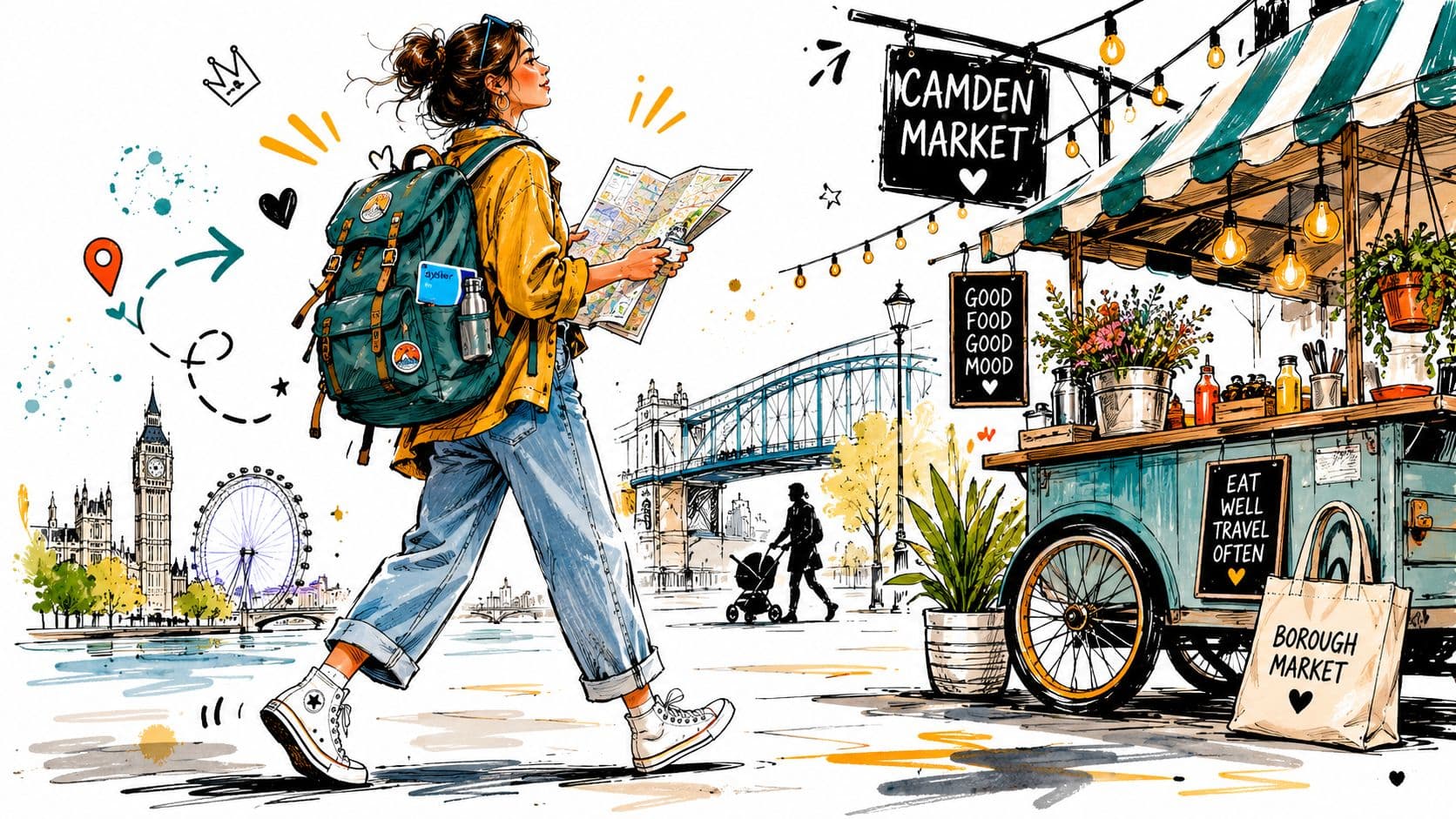
Sleep in a well-connected area, not the cheapest bed on the map. A lower nightly rate can backfire if you spend every morning paying in time and transport.
Spend on movement, not filler
Backpackers usually get the most value from East London bases like Shoreditch or Bethnal Green. You're close to markets, nightlife, and multiple transport options. Use that flexibility to build each day around one paid priority, if any, and keep the rest free.
The Great Fire of London is a useful mental marker for exploring the old city. Historical summaries describe how the fire burned from 2 to 6 September 1666, destroyed about 13,200 houses and 87 churches, and reshaped the city after starting on Pudding Lane, according to Michelin Guide's London history overview. Walking the City with that in mind makes even a free self-guided route feel richer.
A low-cost week that still feels full
This is a week I'd recommend to someone trying to stretch both money and energy:
- Day 1: Free walk around Westminster and St James's Park.
- Day 2: British Museum and a cheap dinner in Soho or Chinatown.
- Day 3: Shoreditch street art, Brick Lane, vintage browsing.
- Day 4: South Bank walk, Tate area, bridge views, sunset by the river.
- Day 5: Borough Market browsing, then choose one affordable meal instead of grazing all day.
- Day 6: Notting Hill or Camden, depending on your taste.
- Day 7: Big park day, laundry, hostel social night, early train or airport prep.
A few trade-offs keep this itinerary honest:
- Buy transport intelligently: A good transit setup matters more than a hop-on sightseeing bus.
- Use markets for one main meal: Snacking your way through London gets expensive faster than a proper lunch.
- Choose free views when possible: The skyline is still the skyline, whether you paid for it or not.
- Stay connected on purpose: Maps, live route changes, and ticket emails are easier to manage with an eSIM for travel.
London is expensive when you improvise badly. It's manageable when you move with intent.
4. Content Creator's 7-Day London Photo & Video Itinerary
London rewards creators who think in light, texture, and pacing instead of famous-location bingo. If you only chase the obvious shot list, your week fills up with queues, duplicate angles, and footage everyone already has.
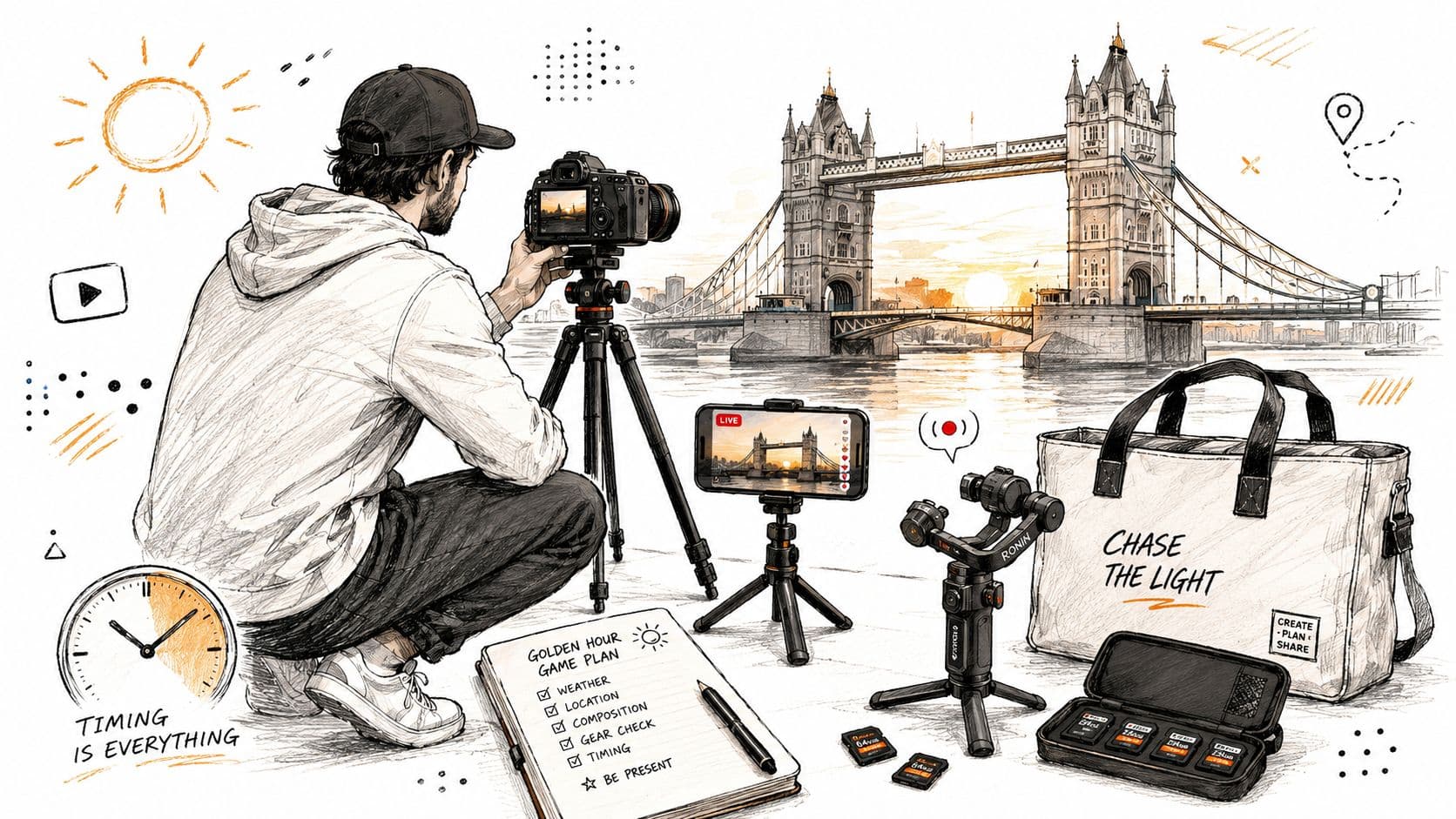
The better approach is to pair one anchor shot with a supporting neighborhood. Tower Bridge pairs with the City and the riverside. Notting Hill pairs with side streets and café footage. Shoreditch pairs with murals, storefronts, and candid movement.
Shoot by light, not by neighborhood labels
Use early mornings for bridges, riverbanks, and cleaner street scenes. Keep midday for interiors, markets, covered arcades, and B-roll details. Save golden hour for the Thames, Primrose Hill, or skyline-facing spots.
A common trap is trying to post everything in real time. Don't. Capture all day, cull over dinner, upload selectively, and save heavy transfers for your accommodation or strongest mobile connection.
- Day 1: Westminster and South Bank at dawn.
- Day 2: Tower Bridge, City textures, and evening skyline.
- Day 3: Notting Hill color, Portobello details, café sequences.
- Day 4: Shoreditch murals and movement-heavy street clips.
- Day 5: Camden for tighter edits, food shots, and crowd energy.
- Day 6: Museum or gallery interiors, then rooftop or river sunset.
- Day 7: Pickup shots, voiceovers, reshoots, and backup day.
Shoot wide, medium, and detail at every stop. That's what gives you editing options later.
A creator week with usable output
Creators usually lose time in three places: transport dead zones, battery drain, and indecision. Solve all three early. Download offline maps anyway, carry a battery pack, and pin exact shooting positions the day before.
For London-specific work, monitor venue access closely. Flexible rooftop plans can collapse if you assume you'll just walk in. Keep one paid backup, one free backup, and one ground-level skyline option ready.
If you want a quick visual feel for how popular London video coverage tends to frame the city, this travel-style clip is useful for reference before you plan your own route:
This itinerary works best when you leave room for reshoots. London weather changes fast, and some of the best content comes from returning to the same spot under different conditions instead of chasing ten new places in one day.
5. Luxury 7-Day London Sophisticate Experience
Luxury days in London aren't about cramming the most expensive options into a week. Its advantage is friction reduction. Better reservations, easier transfers, stronger timing, quieter access, and enough space in the schedule to enjoy what you booked.
That means starting with hotels that can coordinate for you. A good concierge can handle dining, cars, timing adjustments, and occasion-based requests more smoothly than a traveler trying to patch everything together by app.
Reserve the hard parts early
The best luxury week has a clear structure. Put your hardest reservations in the middle of the trip, not on arrival day. You'll be sharper, your plans will be more stable, and you'll have room to recover if a booking changes.
Monday or Tuesday is good for a refined afternoon tea or private shopping appointment. Midweek works well for a premium museum or gallery experience. Friday or Saturday fits your best dinner reservation and theatre night. Leave one afternoon unscheduled for Mayfair, Belgravia, or a personal-shopping detour.
A few practical rules matter more than people admit:
- Dress one level up: Smart casual works in many places, but London's higher-end venues still reward polish.
- Use car service selectively: Cars are useful for theater nights and rain-heavy days, less useful in dense central traffic.
- Confirm day-of details: Menus, dress expectations, and arrival windows change more often than people expect.
- Keep mobile confirmations handy: Screenshots save hassle when reception is weak inside stone buildings or lower-ground venues.
A polished seven-day flow
A strong luxury week might look like this:
- Day 1: Gentle arrival, Mayfair check-in, low-key dinner nearby.
- Day 2: Private or premium cultural visit, followed by tea.
- Day 3: Royal London with a relaxed lunch and shopping after.
- Day 4: Bespoke tailoring or design-led retail appointment.
- Day 5: River-facing lunch, rest, then top-tier dinner.
- Day 6: Theatre night with a late cocktail.
- Day 7: Chauffeured day trip or one final neighborhood afternoon.
The people who enjoy London most at this level don't over-explain every day. They leave room for mood, weather, and appetite. That's what makes a premium itinerary feel effortless instead of overproduced.
6. Family-Friendly 7-Day London Itinerary with Kids
Family trips in London succeed or fail on pacing. Not on ambition. Kids can handle long days when the rhythm makes sense, but they usually don't recover well from back-to-back indoor queues, late dinners, and too much Tube switching.
The easiest family win is to pair every museum or attraction with outside time. London makes that possible better than most large cities.
Keep days short and recoverable
South Kensington is especially useful for families because you can combine museums, broad pavements, and park space without a lot of transit friction. Westminster also works if you keep the sightseeing mostly outdoors.
Aim for one anchor activity each day, then a nearby playground, park, river ride, or food stop. Leave afternoons loose enough for snacks, rests, and early returns if needed.
Children rarely complain about seeing “too little” London. They complain when adults keep dragging them through one more thing.
Seven days without overstretching kids
A family-friendly week could run like this:
- Day 1: Easy arrival and local park time.
- Day 2: Natural History Museum, then Kensington Gardens.
- Day 3: Science Museum and a simple lunch nearby.
- Day 4: Westminster walk, river boat, and early dinner.
- Day 5: London Zoo or another animal-focused day.
- Day 6: Covent Garden performers and flexible wandering.
- Day 7: Regent's Park, Hyde Park, or a choose-your-own repeat favorite.
Some practical choices help a lot:
- Book around sleep, not ideals: The best slot isn't always the earliest one.
- Use stroller-friendly route planning: Fewer stairs can matter more than a shorter ride.
- Carry snacks and spare layers: London weather turns small inconveniences into family meltdowns quickly.
- Keep everyone connected: Mobile data helps with messaging, maps, and changing plans on the move.
This itinerary also works well for mixed-age groups because adults still get recognizable London highlights without forcing every day into full tourist mode.
7. Cultural Deep-Dive 7-Day London Literary & Arts Itinerary
Some people don't come to London for a checklist. They come for reading rooms, theatre programs, difficult exhibitions, old streets, and the pleasure of staying with an idea for longer than a photo stop allows.
This is the richest way to spend seven days in London if you care more about atmosphere and meaning than quantity. It also rewards restraint. One gallery in full attention is worth more than three half-seen institutions in a blur.
Choose fewer institutions and stay longer
Center the week around Bloomsbury, the South Bank, and the West End. Those areas give you libraries, galleries, theatre, historic streets, and enough cafés to process what you've seen between stops.
A good cultural itinerary mixes major institutions with smaller visits. The British Library can sit alongside a neighborhood bookshop. Tate Modern can share a day with a riverside walk and an evening performance. Bloomsbury works best on foot, not as a rushed stop between Tube rides.
A week for readers, gallery-goers, and theatre lovers
Try this flow:
- Day 1: Bloomsbury walk, bookshops, and a quiet museum or library afternoon.
- Day 2: British Library area and literary London wandering.
- Day 3: National Gallery or another major collection, then theatre at night.
- Day 4: Tate Modern and South Bank reading time.
- Day 5: Whitechapel, Shoreditch galleries, or smaller contemporary spaces.
- Day 6: Westminster Abbey or historic church architecture, then an evening concert or play.
- Day 7: Return to the institution that interested you most, not the one you think you “should” revisit.
One practical note matters more than it seems. Ticket timing and opening-hour checks can shape this entire week. Theatre seats, special exhibitions, reading-room access, and evening events often shift. Staying connected makes last-minute booking much easier, especially when you're moving between venues and deciding in real time.
7-Day London Itineraries Comparison
Choose the version of London that fits how you travel. A first-time visitor trying to work full days will have a worse week than a digital nomad who builds in work blocks from the start. The same goes for families, creators, backpackers, and culture-focused travelers. Seven days is enough in London, but only if the plan matches your pace, budget, and tolerance for advance booking.
The table below compares all seven traveler personas side by side, with trade-offs that matter most once you are on the ground.
| Itinerary | Implementation complexity | Resource requirements | Expected outcomes | Ideal use cases | Key advantages |
|---|---|---|---|---|---|
| Classic 7-Day London Explorer | Moderate. Structured daily schedule with some advance bookings | Mid-range cost, public transport, timed tickets, reliable mobile data | Strong landmark coverage, balanced pacing, solid first-trip overview | First-time visitors, leisure travelers, some families | Well-planned routes, good mix of paid and free stops |
| Digital Nomad's 7-Day London Workation | Moderate. Work blocks, meeting timing, and neighborhood choice need coordination | Reliable high-speed internet, co-working passes, flexible lodging | Productive week with room to explore, useful networking opportunities | Remote professionals, freelancers, entrepreneurs | Clear work and sightseeing split, flexible schedule, easier to justify higher daily costs |
| Budget Backpacker's 7-Day London Adventure | Moderate to high. Savings depend on free-entry timing and smart transport choices | Low budget, hostel stay, Oyster or contactless payment, basic data plan | Affordable week with strong neighborhood exposure and plenty of flexibility | Backpackers, students, longer-term travelers | Low daily spend, adaptable days, better feel for local areas outside the main tourist core |
| Content Creator's 7-Day London Photo & Video Itinerary | High. Light, weather, crowd levels, file backup, and location prep all matter | Pro gear, fast mobile data, cloud storage, possible permit costs | High volume of usable content with strong visual variety | Photographers, influencers, videographers, marketers | Built around shooting windows, visually strong routes, easier collaboration planning |
| Luxury 7-Day London Sophisticate Experience | Moderate. Reservations and concierge support handle much of the friction | High-end hotels, private transport, fine dining, premium bookings | Low-friction week with exclusive access and highly tailored service | Affluent travelers, executives, special occasions | Shorter waits, private access, higher comfort throughout the week |
| Family-Friendly 7-Day London itinerary with Kids | Moderate. Daily pacing matters more than distance covered | Family-sized accommodation, child-friendly tickets, moderate mobile connectivity | Smoother days, fewer meltdowns, better engagement for children | Families with young children, multi-generational groups | Sensible pacing, easier meal and restroom planning, activities that hold children's attention |
| Cultural Deep-Dive 7-Day London Literary & Arts Itinerary | High. Exhibition timing, performance tickets, and opening hours shape the week | Moderate to high spend on exhibitions, theatre, and advance reservations | Richer cultural context, stronger sense of place, more memorable specialist visits | Readers, art lovers, students, culturally curious travelers | Carefully chosen cultural stops, access to talks and performances, less time wasted on generic sightseeing |
One pattern stands out. Complexity rises when your week depends on timing rather than distance. Creators need light. Nomads need reliable internet and quiet workspaces. Culture-focused travelers need ticket discipline. Families need breaks before anyone asks for one.
If you want the safest all-round option, the Classic Explorer gives the highest margin for error. If cost is the main constraint, the Backpacker plan stretches London well, but it works best for travelers who do not mind trade-offs on comfort and spontaneity. If time has to serve work as well as sightseeing, the Workation plan is the most realistic, not the most romantic.
Use this comparison as a filter, not a scorecard. The best itinerary is the one you can follow for seven days without spending the whole week adjusting it.
Stay Connected and Make Your London Days Count
The best number of days in London depends less on the city and more on the kind of trip you're taking. A first-time visitor can fill a week with landmarks and still leave with a long return list. A digital nomad can make a seven-day stay feel productive by protecting work hours and using afternoons well. Families need shorter days. Creators need light and backup plans. Culture-heavy travelers need focus more than speed.
That's the core lesson behind all seven itineraries. London rewards clarity. If you know what kind of week you want, the city becomes much easier to find your way around. If you try to do every version of London at once, your days start to blur together and the practical friction takes over.
The city itself encourages a layered trip. Its story reaches back to Roman Londinium, its medieval and early modern history still shapes the street plan, and events like the Great Fire permanently changed how central London was rebuilt. You feel that when you move between Westminster, the City, South Bank, Bloomsbury, and the outer neighborhoods. A good itinerary doesn't fight that complexity. It uses it.
Reliable navigation matters more in London than many travelers expect. Tube changes, bus reroutes, timed-entry tickets, mobile boarding passes, live maps, and restaurant confirmations all pile up quickly over a week. Even if you prefer a spontaneous style, you still need your phone working smoothly. That's especially true if you're arriving tired, changing neighborhoods often, working remotely, or coordinating with a group.
That's where mobile data becomes less of a convenience and more of a travel tool. RoamFly is one relevant option if you want to activate UK data before or during your trip. According to the company information provided, RoamFly offers instant eSIM data plans for 200+ countries and plans starting from $4, which can help travelers avoid physical SIM swaps and standard roaming setups. For London specifically, that means easier access to maps, booking apps, transport updates, and messaging from the moment you land.
The smartest move is simple. Pick the persona that matches how you travel, borrow ideas from one neighboring itinerary if needed, and protect a bit of open time in the week. London isn't a city you conquer in seven days. It's a city you experience well when your plan fits your real habits.
If you do that, your days in London won't just be full. They'll be usable, memorable, and far less stressful.
Choose a RoamFly eSIM before your London trip if you want mobile data ready for maps, bookings, transport apps, and day-of plan changes without dealing with a physical SIM swap.