Compare eSIM travel prepaid data plans that work abroad — real prices, coverage reach, and which plan type fits your trip length and destination count.
AT&T's international day pass runs $12 per day. Ten days in Spain means $120 before you stream a single video, check a map in Barcelona's Gothic Quarter, or confirm a train time. A prepaid Spain eSIM from Roamfly covers the same ten days for under $15 total.
Carrier roaming works by billing your home plan's rates against foreign networks — arrangements negotiated for convenience, not value. GSMA's 2024 Mobile Economy report found that retail roaming prices in Western Europe remain 4–8x higher than equivalent local prepaid rates (GSMA Intelligence Mobile Economy 2024), a gap that has barely shifted despite regulatory pressure (GSMA Intelligence Mobile Economy 2024). The math is just as brutal in Southeast Asia and Latin America.
The full breakdown of how roaming markups compare to travel eSIM rates is covered in Roamfly's Vodafone vs travel eSIM cost comparison. The short version: your carrier is selling convenience. You're paying a steep premium for it, and that premium rarely buys better coverage than a local prepaid rate does.
Single-country vs regional vs global plans: which type fits your trip
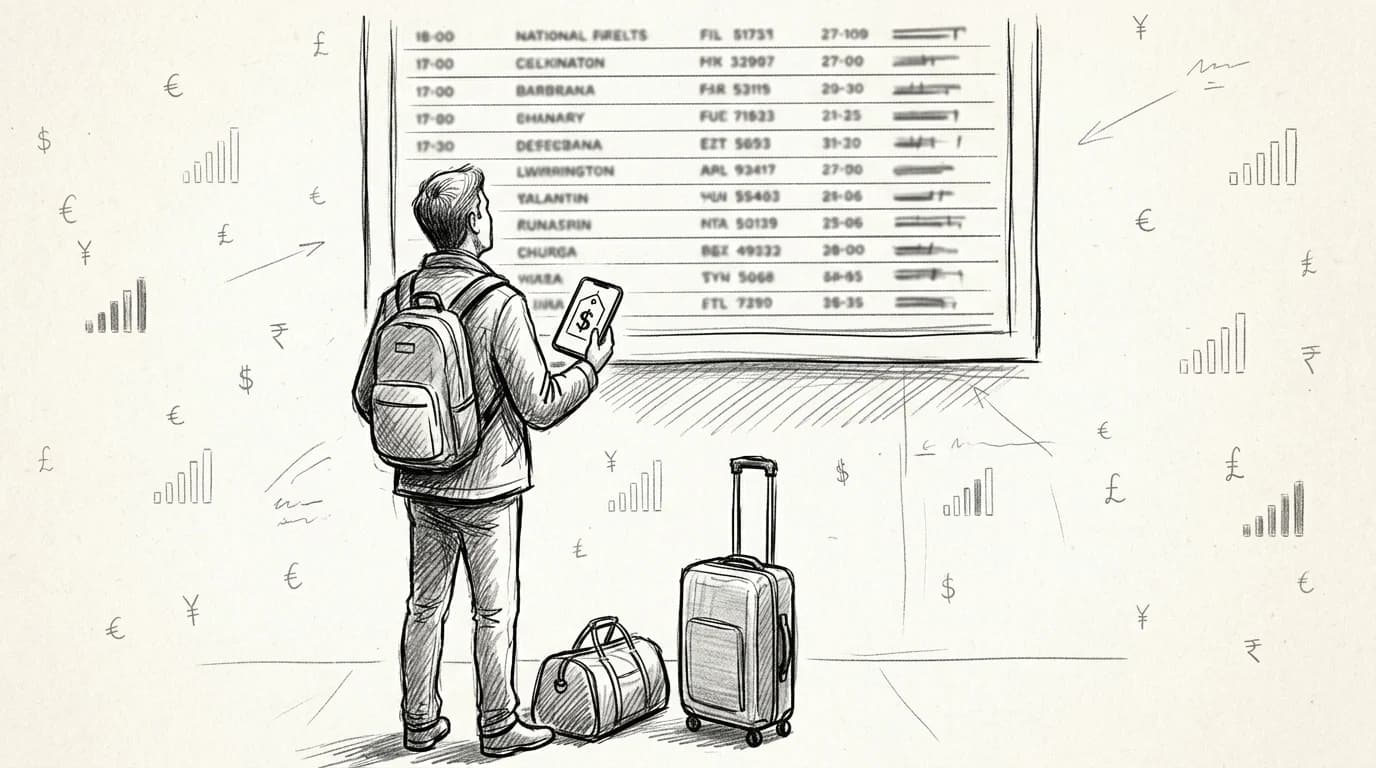
A one-country trip to Portugal is easy: buy a Portugal plan, done. Three weeks bouncing between Japan, South Korea, and Taiwan is where travelers lose money fast by stacking three separate plans with overlapping validity windows they'll never fully use.
Single-country plans cost less per GB — often 30–40% less than equivalent regional coverage — but that math only holds when you stay inside one border. Regional plans span a fixed cluster: a Europe bundle might cover 35 countries under one validity window, which beats buying individual SIMs at each airport. Global plans cast the widest net, sometimes 100-plus countries, but you pay a per-GB premium for that flexibility; they make sense for frequent travelers crossing regions in a single trip, not a two-week beach holiday in Bali.
Practical rule: If your itinerary touches three or more countries in under 30 days, a regional or global plan almost always wins on total cost. Two countries or fewer, go single-country every time.
Juniper Research projects cross-border eSIM roaming to grow at 35% CAGR through 2030 (Juniper Research eSIM Roaming Forecast 2025–2030), which explains why regional plan catalogs are expanding fast (Juniper Research eSIM Roaming Forecast 2025–2030). For multi-stop itineraries, Roamfly's guide for business travelers breaks down which plan type holds up across back-to-back trips.
Practical rule: If your itinerary crosses fewer than three countries on the same continent, a single-country plan stacked twice still beats a regional eSIM on price per GB — the regional premium only pays off at country four and beyond.
Data allowance and validity: what the numbers actually mean on the road
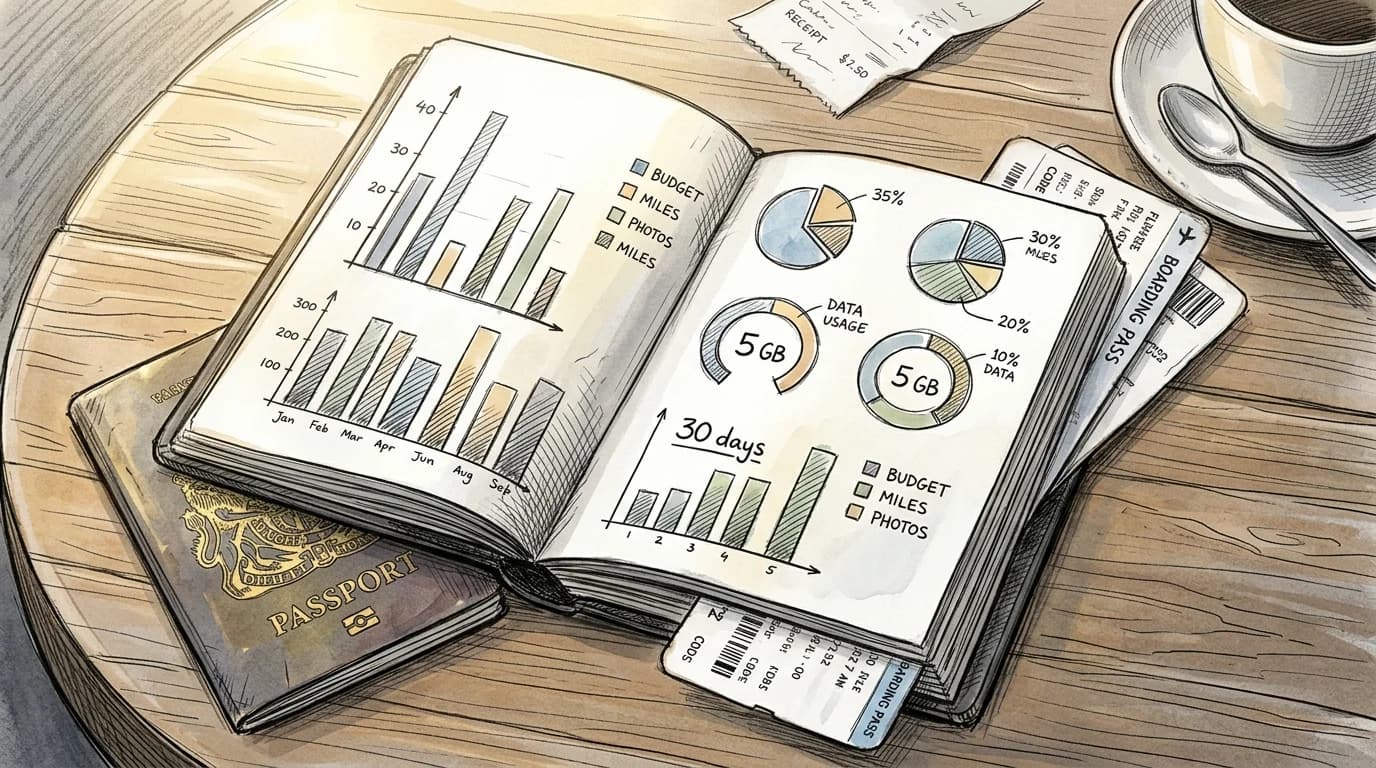
One Netflix episode at standard definition burns roughly 1 GB. Google Maps navigation through a full day in a city you don't know — reroutes, transit overlays, street view checks — adds another 300–400 MB. A 20-minute WhatsApp video call with family back home eats 200 MB.
Stack a week of that and you're looking at 8–12 GB for a traveler who streams occasionally, leans on maps, and checks in by video a couple of times. Light users — email, messaging, occasional map lookup — can survive comfortably on 3–5 GB for the same window.
Validity matters as much as the data ceiling. A 10 GB plan that expires in 7 days is useless on a 14-day trip, even if you never hit the data cap. Many eSIM UK prepaid data plans for travelers separate these two numbers, so read both before buying — the bigger figure on the label is usually the GB, not the days.
Three plan types side by side
| Factor | Single-Country | Regional | Global |
|---|---|---|---|
| Best for | One destination, 1–2 weeks | Multi-stop, one region | 4+ countries, mixed regions |
| Cost efficiency | Highest per destination | Mid-range | Lowest per country |
| Validity flexibility | Short windows, 7–30 days | 7–30 days shared | Up to 90 days |
| Setup complexity | One plan per country | One plan, auto-switches | One plan, works globally |
| Leftover data risk | High on short trips | Moderate | Low across long trips |
Device compatibility: before you buy any plan
Carrier lock kills more eSIM purchases than anything else. Your phone needs two things before any plan works: hardware eSIM support and unlocked status — and surprisingly many travelers discover the second problem only after checkout.
On iPhone, eSIM support starts with the XS (2018). Every model from XS through iPhone 16 carries a hardware eSIM chip, though the iPhone 14 and later sold in the US ship with no physical SIM tray at all (Apple's eSIM-compatible iPhone list). Android is messier — Samsung's Galaxy S21 series and later support eSIM, as do Pixel 3 and above, but budget Androids from the same years often omit the chip entirely. Check Settings > General > About > Available SIM slots before you shop.
Practical rule: If you bought your phone directly from a carrier on a payment plan, it's almost certainly locked. Call them, request an unlock, and wait 24–48 hours for it to propagate — do this at least a week before departure.
The setup guide walks through every activation step once you've confirmed your phone qualifies.
Before you buy any travel eSIM
- Confirm your phone is carrier-unlocked
- Check eSIM compatibility in Settings or GSMA's device list
- Count every country on your itinerary, not just the main one
- Match validity days to your actual trip length
- Buy and install on home Wi-Fi before departure
Practical rule: Check your carrier lock status before you buy any eSIM plan. An iPhone purchased on a US carrier installment plan within the last 12 months is almost certainly still locked — unlocking takes 48–72 hours and cannot be rushed at the departure gate.
How to pick and activate the right plan in under five minutes
Three questions get you to the right plan fast. How many countries? How many days? How data-hungry are you?
One country, under three weeks: buy a single-country plan. Multiple countries with clear borders and fixed dates: a regional plan beats stacking individual purchases by 30–40% in most Roamfly corridors. Fuzzy itinerary with last-minute detours: go global and stop second-guessing every border crossing.
Once you've picked the type, filter by validity first, then gigabytes. A 10 GB / 15-day plan is useless on a 20-day trip no matter how cheap it looks. Match validity to your last full day in-country, not your departure flight.
Purchase takes under two minutes. Activation is where timing matters — install the eSIM profile before you board, but leave it on standby until you land. Your physical SIM keeps working at home; the eSIM takes over the moment you toggle it on arrival.
Practical rule: If your phone throws a QR scan error or "plan not supported" on first activation, the iPhone eSIM troubleshooting guide covers the four most common failure states in sequence — work through them before contacting support.

Get connected before you leave
Ready to get connected? Browse Roamfly's full catalog of eSIM travel prepaid data plans that work abroad and activate in under five minutes — before your gate closes.
Waiting until you land costs you. At Chhatrapati Shivaji Maharaj International, the SIM kiosk queues run 30 minutes on busy mornings; at Charles de Gaulle Terminal 2E, the queue is shorter but the prepaid rates are roughly three times what you'd pay for a comparable eSIM bought from home.
Buy before you board. Set the activation date to match your arrival, or trigger it manually the moment wheels-down is announced — your home number stays live until you switch. If India is on your itinerary, the guide to eSIM India prepaid data plans for travelers walks through local network quirks worth knowing before you land.
The catalog updates daily. Prices and GB caps shift with carrier contracts, so the plan you see today is the one to lock in.
Related guides
Frequently asked questions
Do eSIM travel prepaid data plans work on all smartphones?
No. eSIM requires hardware support: iPhones from XR (2018) onward, Google Pixel 4 and later, and Samsung Galaxy S20+ flagships all qualify (Apple Support — Use an eSIM on your iPhone). Older budget Android devices rarely do. Verify by going to Settings → General → About → Available SIM on iPhone, or Settings → Connections → SIM Manager on Samsung.
Can I top up an eSIM plan if I run out of data mid-trip?
Most major providers, including Roamfly, allow in-app top-ups that apply within 60 seconds without scanning a new QR code. The key caveat: top-ups only work while the original plan is still within its validity window. A 7-day plan that expires at midnight cannot be topped up at 12:01 AM.
Is hotspot tethering allowed on travel eSIM prepaid plans?
It depends on the plan tier, not the eSIM technology itself. Roamfly's regional and global plans explicitly permit tethering; some budget single-country plans restrict it at the carrier level. Check the plan detail page before buying — tethering restrictions are enforced by the host network, not your phone settings.
When should I activate a travel eSIM — before or after landing?
Install the eSIM profile before you board, but leave it set to inactive. Activate the moment the plane lands, before clearing customs — that way you have navigation and messaging ready at baggage claim. Activating at home while on Wi-Fi avoids any risk of QR-scan failure in a crowded arrivals hall with weak signal.
Can one eSIM prepaid plan cover multiple countries on the same trip?
Yes, if you choose a regional or global plan. A regional Europe plan, for example, covers 30–40 countries under a single data pool — useful for a two-week itinerary spanning Paris, Amsterdam, and Lisbon. Single-country plans stop working the moment you cross a border, so they only make sense for trips confined to one destination.