
Discover the best place to travel in november 2026 with our top 10 picks! Find perfect destinations, activities, and tips for your ultimate autumn getaway.
November is when trip planning gets harder in a very specific way. Summer routes are over, holiday pricing is starting to creep in, and a destination that looks great on a generic roundup can still be a poor fit if you need stable weather, sensible transport, and reliable data the minute you land.
That is why November is such a useful month for travelers who plan around trade-offs instead of headlines. In many places, you get better crowd levels than peak season, more comfortable daytime conditions than midsummer, and enough local activity to make a city feel lively without paying top-tier rates for everything. For remote workers and travelers handling work on the road, the differentiator is logistics. Airport arrival times, intercity transfers, local SIM setup, and backup connectivity often matter more than a pretty hotel photo.
Chiang Mai is a good example. Mid-November can line up with Loy Krathong and Yi Peng, which makes the city far more compelling for travelers who want cultural timing, not just good weather. It also shows the downside of broad November lists. A strong destination on paper still needs the right plan for flights, local movement, and mobile data if you intend to work between stops.
This guide focuses on destinations that hold up under real trip planning. That means city combinations that work in November, realistic pacing, and practical connectivity advice, including where an eSIM setup makes the trip easier. Travelers considering Japan can start with this guide to a Japan eSIM for arrival-day connectivity, especially if they want to skip airport SIM counters and get maps, messaging, and ride apps working before leaving the terminal.
The goal is simple. Choose a place that fits how you travel, then set it up so the trip runs smoothly from day one.
1. Japan (Tokyo, Kyoto, Osaka)
A lot of travelers looking for the best place to travel in November want one trip that feels seasonal without becoming a weather gamble. Japan is one of the strongest answers. November usually lines up with autumn color, city energy, and a transport system that makes multi-stop travel realistic even on a short itinerary.
For remote professionals, Japan is also easy to work through. Tokyo gives you polished co-working options and fast-moving neighborhoods. Kyoto gives creators and photographers a better visual payoff. Osaka is the practical middle ground if you care about food, rail access, and lower-friction day trips.
Why November works
Japan fits the broader November pattern that travel publishers consistently reward: shoulder-season comfort, lighter crowd pressure than peak summer, and strong seasonal appeal. Jetpac specifically includes Japan among its recommended November picks for climate and lighter crowds in its November travel roundup.
That matters on the ground. You can move from airport train to hotel check-in to temple visit to dinner reservation in the same day without feeling like every stop is overloaded.
Practical rule: In Kyoto, go out early. The best temple visits and photo windows happen in the first part of the day, and your mobile data matters most when you're chaining trains, buses, and map changes together.
A good three-city setup is Tokyo first, Kyoto second, Osaka last. That order works because Tokyo absorbs jet lag best, Kyoto rewards fresh mornings, and Osaka is an easy final base before departure.
How to plan it well
Use an eSIM before arrival, not after. Japan is one of those places where having data from the first minute saves time on rail routing, digital ticket retrieval, and station navigation. RoamFly's eSIM for Japan guide is a useful starting point if you want to sort that before departure.
A few planning habits make the trip much smoother:
- Book smart, not late: November is attractive for domestic and international travelers, so central stays in Tokyo and Kyoto are better locked in well ahead of your trip.
- Use transit apps constantly: Suica or Pasmo is easier when your phone is already connected and you can reroute on the fly.
- Keep a backup layer: Download offline maps anyway. Japan is easy to get around until you hit a giant station at rush hour and lose focus for five minutes.
This is one of the easiest countries to recommend when someone wants culture, mobility, and a trip that still works if they need to answer emails between sightseeing blocks.
A quick look at Japan in late autumn helps set the mood:
2. Morocco (Marrakech, Fez, Essaouira)
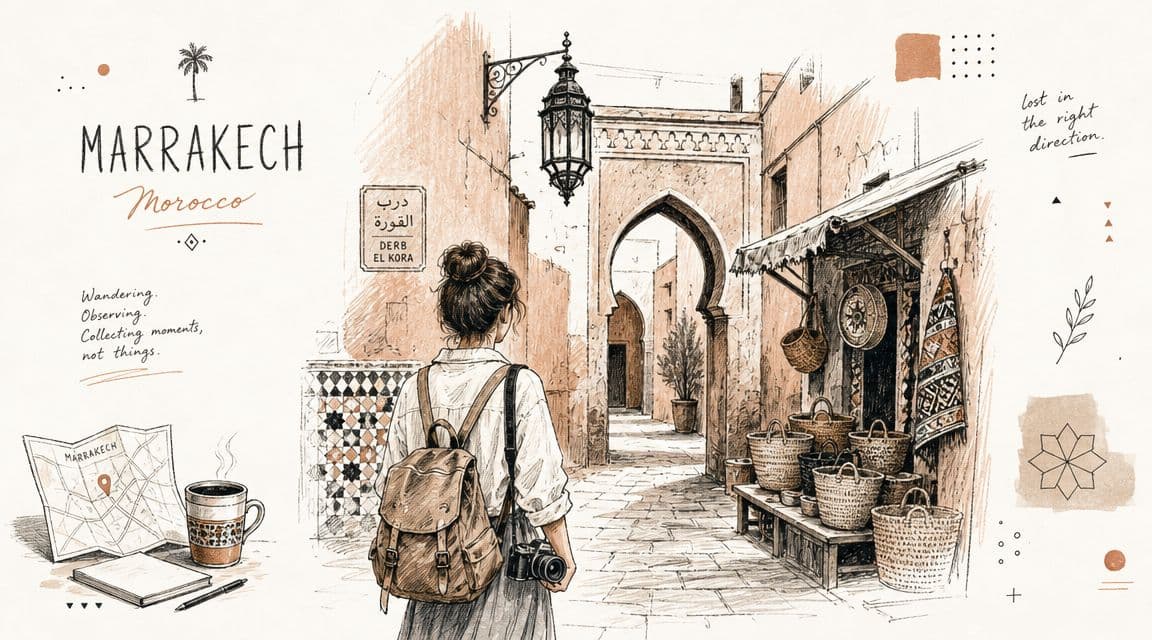
Morocco works best in November when you want variety without crossing huge distances. Marrakech gives you pace and color. Fez gives you depth and older urban texture. Essaouira gives you breathing room if medina intensity starts wearing you down.
That mix is why Morocco keeps earning a place in serious November planning. You can build a trip around markets, architecture, desert excursions, and café work sessions without dealing with punishing summer heat.
Where Morocco fits best
Morocco is a strong choice for travelers who want cultural density more than beach predictability. That distinction matters because many “best place to travel in November” lists over-index on warm averages and underplay weather reliability. As Wendy Perrin's November trip ideas note, a destination can look ideal on average while still being a poor fit for beach-heavy or outdoor-first plans in a specific week, especially in regions where November remains rainy (Wendy Perrin's November trip ideas).
Morocco avoids part of that problem because the trip isn't dependent on perfect beach weather. If one afternoon turns cooler or windier, you can still have a great day inside palaces, riads, workshops, museums, or long meals.
Connectivity rules that matter
Morocco is easy to romanticize and slightly harder to work from unless you plan around known-good locations. Riads can be beautiful and still have weak room-by-room Wi-Fi. Medina streets can also make navigation slower than expected, especially on arrival day.
Use a preinstalled Morocco eSIM from RoamFly so your phone works as your anchor from the airport onward. Then build redundancy into the rest of the trip.
- Choose your work base carefully: If you need to take calls, use established co-working spaces or hotels that actively serve business travelers.
- Treat cafés as secondary, not primary: Great for lighter work. Riskier for upload-heavy tasks or important meetings.
- Use offline maps heavily: In older medinas, reliable mapping matters almost as much as connectivity itself.
Don't plan a full remote-work day from a random riad courtyard just because it looks good on Instagram. Verify the signal where you'll actually sit.
Morocco is one of the best November picks if you want atmosphere and range. It's a weaker choice if your trip depends on nonstop video calls from every stop.
3. Thailand (Bangkok, Chiang Mai, Islands)
You land in Bangkok late, your hotel Wi-Fi needs a login code, and you still need to message your driver, confirm tomorrow's train, and answer two work messages. Thailand is excellent in November, but it rewards travelers who plan the first 24 hours well.
It earns its place on this list because it can support very different trips in the same month. Bangkok gives you flight options, strong hotel inventory, and the easiest base for work-heavy days. Chiang Mai adds culture, cooler evenings, and one of the most established remote-work scenes in Southeast Asia. The islands can be the right final leg if your schedule has room for weather shifts and transfer delays.
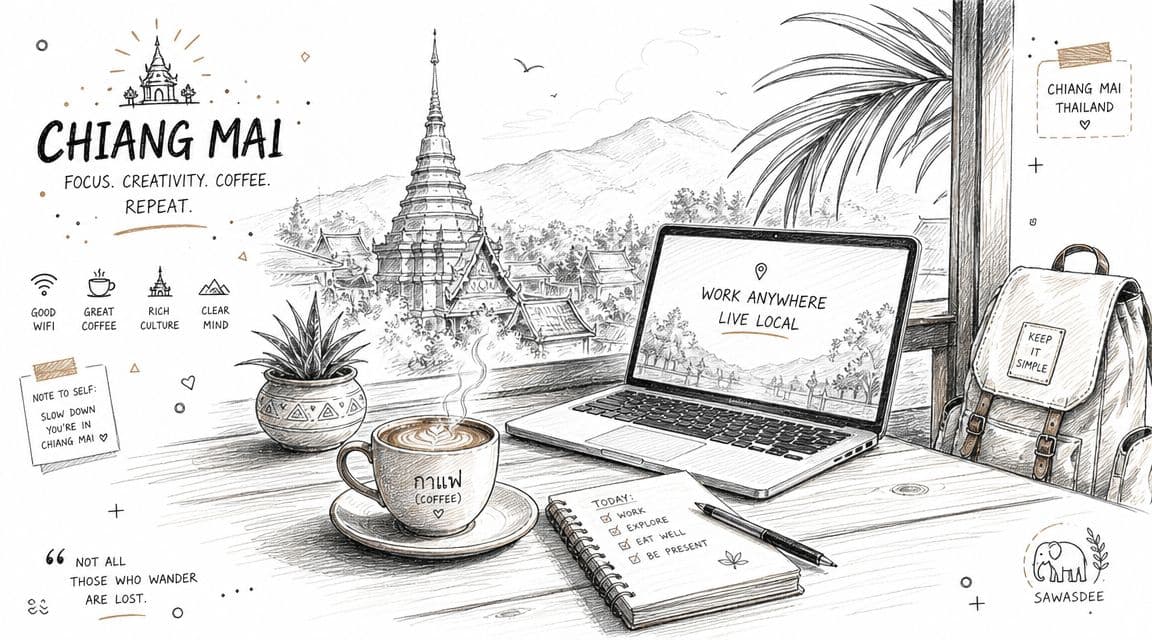
Chiang Mai gets special attention in November because Loy Krathong and Yi Peng usually fall around the lunar full moon, which often makes this one of the most memorable times of year to visit. That popularity comes with trade-offs. Rates rise, central areas book earlier, and transport around festival dates takes more patience than travelers often expect.
Why Thailand works so well in November
November is one of the easiest months to build a mixed itinerary here. Days are generally more comfortable for long city walks, temple visits, and market evenings than they are in the wetter part of the year. Crowds still exist in major hubs, but the trip usually feels more manageable than peak holiday periods later in the season.
Thailand also gives you unusually good range for the price. You can spend three nights in Bangkok for food, neighborhoods, and logistics, move to Chiang Mai for a calmer work base, then add beach time only if the forecast and ferry schedule support it. That flexibility matters more than a perfect weather promise.
For remote workers, the practical split is simple. Bangkok is the safest choice for calls, meetings, and short-notice changes. Chiang Mai is better for longer stays, café work, and lower day-to-day costs. Islands such as Koh Samui or Phuket fit best when work is lighter and you can treat transit days as partial days, not full workdays.
Plan the route before you book the hotels
Thailand feels easy once you are set up. Arrival day is where trips usually go wrong. Install your Thailand eSIM before departure so your phone works the moment you land for Grab, messaging, maps, banking verification, and last-minute booking changes.
Then build the trip around known friction points:
- Use Bangkok as your buffer city: If you arrive from a long-haul flight, spend the first night or two there before adding domestic transfers.
- Book work stays for function first: In Chiang Mai or Bangkok, confirm desk space, room signal, and backup options before choosing a photogenic apartment.
- Treat co-working spaces as backup infrastructure: HUBBA in Bangkok and Punspace in Chiang Mai are useful when accommodation Wi-Fi becomes unreliable.
- Keep island transfers light: Ferries, vans, and short flights can run late. Avoid scheduling important calls on the same day you change islands.
- Ask better questions before longer stays: Request a recent speed test, ask whether the connection is shared across multiple units, and confirm if mobile signal is strong indoors.
I usually advise clients to choose only two Thai bases for a one-week trip and three bases for a ten- to twelve-day trip. More than that starts to look efficient on paper and tiring in practice.
Field note: Thailand is easy to enjoy without much planning. Thailand is much less forgiving if you need reliable connectivity every day. Mobile data solves a surprising amount of that problem, especially on arrival and transfer days.
Thailand is one of the strongest November choices for travelers who want culture, value, and flexibility in one trip. It is also one of the easier countries on this list to shape around modern travel habits, especially if you want your phone ready to work as a map, wallet, translator, hotspot, and backup office from day one.
4. Portugal (Lisbon, Porto, Algarve)
Portugal is the November destination I recommend when someone wants Europe without the harsher edge of late autumn in the north. It's practical, compact, and easy to shape around different priorities. Lisbon works for city energy and remote-work infrastructure. Porto works for food, walkability, and a more grounded feel. The Algarve works if you want slower days and coastal downtime.
There's another reason Portugal belongs on this list. November travel tends to work best in destinations with mild shoulder-season weather, and NH Hotels highlights Marseille at 16°C/9°C with less rain than October and Havana at 29°C/21°C as examples of that broader pattern, while Jetpac also flags Portugal among strong November picks for climate and lighter crowds in its November weather-focused roundup.
Why Portugal is a practical pick
Portugal benefits from that exact shoulder-season logic. The weather is usually workable enough for long walking days, outdoor café time, and coastal viewpoints, but you're no longer competing with summer density. That improves the trip in ways travelers often underestimate. Fewer queues, less transit friction, and easier same-day decisions all make your phone more useful because you can act on what it tells you.
Lisbon is the strongest all-around base if you need a few work blocks between sightseeing. Porto is better if your trip is more leisure-heavy. The Algarve is best when your priority is decompression, not maximizing urban output.
Best setup for remote-friendly travel
Portugal is a good fit for travelers who don't want every day to feel improvised. Neighborhood choice matters a lot. In Lisbon, staying near established co-working and café zones saves time and gives you backup options when one place is too noisy or too full.
Try this approach:
- Pick the neighborhood before the apartment: Príncipe Real and Alcântara tend to work better for mixed work and leisure days than a random cheap listing farther out.
- Verify internet with hosts directly: Don't settle for “good Wi-Fi” in a description. Ask what kind of connection they use and whether people work from the unit.
- Use a Europe-ready eSIM: Portugal works especially well as part of a wider regional itinerary, so choose a plan that doesn't stop being useful after one border crossing.
Portugal isn't the flashiest answer to the best place to travel in November. It is one of the safest good decisions.
5. Mexico (Mexico City, Playa del Carmen, Oaxaca)
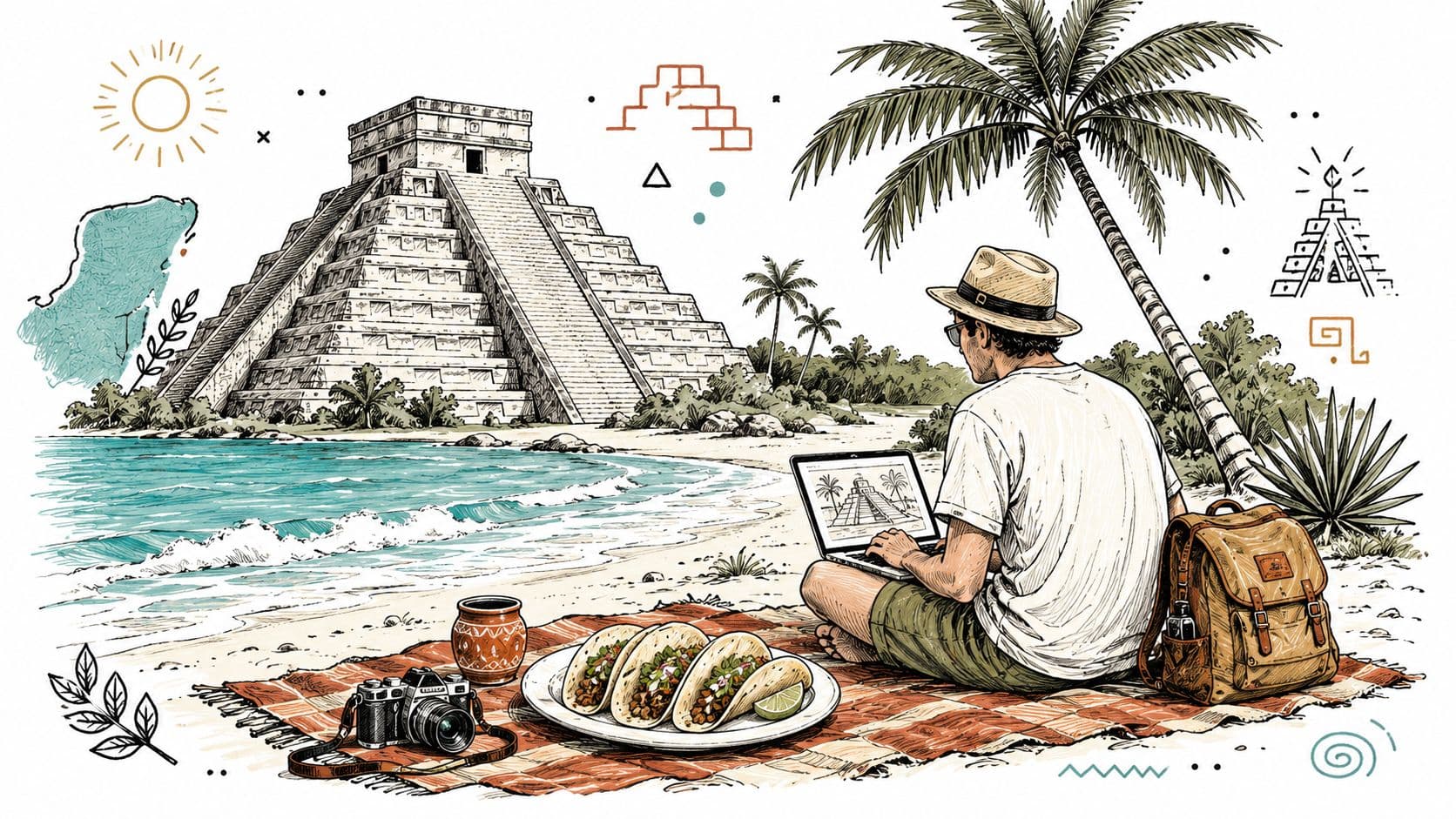
Mexico is strong in November because it gives you three very different trips under one country name. Mexico City is the best choice for urban travelers who want museums, neighborhoods, and serious food. Playa del Carmen suits travelers who want beach access with easy infrastructure. Oaxaca is better for culture-first trips, creative work, and slower pacing.
For many travelers, Mexico hits the sweet spot between access and payoff. It's easy to enter into a one-week trip, but it also supports longer stays well if you're blending remote work with travel.
The strongest November use cases
Mexico is especially good for travelers who want options inside the same itinerary. You can spend one part of the trip in a dense, transit-heavy capital and another in a more relaxed base. That matters because many November guides focus on leisure appeal and barely address trip-purpose fit for remote workers and business travelers, even though practical issues like dependable internet, same-day connectivity, and easy arrival logistics can shape the whole experience (Global Grasshopper's November USA roundup).
Mexico City is the easiest place to work from. Roma and Condesa are the default for a reason. They're walkable, full of cafés, and full of travelers who need exactly the same things you do. Playa del Carmen is more mixed. Good if you choose carefully, frustrating if you don't. Oaxaca tends to reward travelers who keep expectations realistic and plan heavier work sessions from verified accommodation or co-working spaces.
How to avoid common friction
Mexico gets easier when you simplify your setup before arrival. Have mobile data ready, save your accommodation address offline, and know which neighborhood you're entering before the plane lands.
A few rules help:
- Use mobile data as your primary layer: Ride-hailing, map routing, and host messaging all matter immediately on arrival.
- Choose neighborhoods with intent: Cheap listings outside established zones can cost you more in transport time and work interruptions.
- Split work and leisure locations: Don't assume the prettiest stay is also the best place for calls.
Mexico is one of the easiest recommendations for travelers who want warmth, cultural range, and a trip that doesn't need to be overplanned to work well.
6. Greece (Athens, Crete)
Greece in November is less obvious than Spain or Portugal, and that's exactly why it can be a smart pick. You're not chasing peak beach conditions. You're getting ancient sites, urban life, good food, and a Mediterranean pace without summer pressure.
Athens is the safest base. It has the strongest year-round infrastructure, the easiest transport connections, and enough cafés and work-friendly spaces to support a mixed trip. Crete comes second if you want island character without relying on tiny off-season operations.
Why Greece is better than many travelers expect
Jetpac includes Greece among its broader November recommendations for climate and lighter crowds. That's useful shorthand because Greece works well when your expectations match the season. November is not about island hopping at full speed. It's about choosing one solid base, then enjoying ruins, neighborhoods, museums, and coastal drives without fighting tour-bus volume.
Athens shines for exactly that reason. You can do major landmarks early, work in the afternoon, and still have evenings that feel lively.
Greece is a shoulder-season country in November, not a beach fantasy country. If you plan for that version of it, the trip is usually better.
What works in November
The practical move is to stay in Athens unless you have a clear reason to go elsewhere. If you do want an island, choose a larger one with stronger year-round services. Crete is the obvious candidate.
Keep your logistics tight:
- Book ferries carefully: Reduced schedules can turn a simple transfer into a full-day commitment.
- Use an EU-ready setup: Regional eSIM coverage helps if Greece is one stop on a wider Europe route.
- Don't over-fragment the trip: Two bases are enough. More than that starts wasting November's biggest advantage, which is lower-friction travel.
Greece won't suit travelers who want guaranteed swim weather. It suits travelers who want history, food, and manageable movement.
7. Colombia (Medellín, Cartagena, Bogotá)
Colombia works well for travelers who want energy, affordability, and a strong city-based trip. Medellín is usually the first recommendation because it's the easiest place to settle into. Bogotá works better if you want a bigger cultural calendar and don't mind a more serious urban rhythm. Cartagena is the least remote-work-friendly of the three if you need quiet structure, but it's a strong short-stop addition.
The main point isn't that every part of Colombia works equally well. It doesn't. The point is that Colombia gives you viable city living with enough variety to shape the month around your actual purpose.
Who Colombia suits best
This is a good destination for freelancers, consultants, founders between meetings, and remote workers who prefer a city apartment plus co-working membership over a resort-style setup. Medellín is especially strong for that style because you can keep daily life compact. A short walk gets you coffee, groceries, a workspace, and dinner.
Cartagena is better as a compact leisure extension. Bogotá is better if the trip is more cultural than climatic.
Remote-work setup that actually holds up
You don't need a complicated approach here. You need redundancy. Colombia is easy when you stay in established neighborhoods and verify internet quality before paying for a long stay.
Use this structure:
- Stay in proven areas: El Poblado and Laureles in Medellín remain practical because they reduce transit friction.
- Use co-working as backup, not decoration: A membership can save your week if apartment internet becomes unstable.
- Expect variation by building: The city may be good for remote work overall, but the specific unit still decides your day.
If your idea of the best place to travel in November includes a base where you can work normal hours and still enjoy the destination after, Medellín is one of the stronger options in the Americas.
8. Vietnam (Hanoi, Ho Chi Minh City, Da Nang)
Vietnam is one of the best-value answers to the best place to travel in November if your priorities are food, city life, and flexibility. Hanoi gives you atmosphere and depth. Ho Chi Minh City gives you pace and convenience. Da Nang gives you a softer balance between urban comfort and coastal access.
Jetpac also includes Vietnam among its recommended November destinations, which makes sense because it fits the same practical pattern as other strong picks: a destination that stays functional for movement-heavy travel while feeling less crowded than peak periods.
Why Vietnam keeps making smart November lists
Vietnam rewards travelers who like active days. You can stack coffee shops, museums, street-food stops, train connections, and evening walks into a single itinerary without spending half the day waiting around. That makes it especially good for travelers who want more than a resort break.
Hanoi is best for travelers who care about atmosphere. Ho Chi Minh City is easier if you want straightforward remote-work infrastructure. Da Nang works when you want lower intensity without going fully off-grid.
How to keep the trip smooth
Vietnam is better when you stop pretending every guesthouse has work-grade internet. Some do. Some absolutely don't. That's why mobile data matters so much.
Set it up this way:
- Install a Vietnam eSIM before arrival: Your phone becomes your transport, map, translation, and payments support layer right away.
- Choose accommodation with verified connectivity: Ask directly and favor places used by longer-stay travelers.
- Use co-working selectively: The Hive and Toong are useful when you need dependable backup for calls or uploads.
Vietnam is often a better November choice for remote-capable travelers than more expensive alternatives, especially if you value day-to-day livability over polished luxury.
9. Spain (Andalusia, Valencia, Canary Islands)
You land in Spain in November and the first decision is simple: do you want city days, coast days, or the best odds of warm weather? Spain works well because each option is practical. Andalusia suits travelers who want historic cities and mild days. Valencia gives you a balanced base with beach access, good urban transit, and prices that are often easier to justify than Madrid or Barcelona. The Canary Islands make the strongest case if sunshine is the priority.
Spain also fits travelers who need the trip to function, not just look good in photos. High-speed rail, walkable centers, reliable mobile coverage, and plenty of cafés make it easy to keep moving without wasting hours on transfers. For remote workers, that matters as much as the forecast.
Spain's November advantage
Andalusia is the best mainland pick for travelers who want culture without winter gloom. Seville and Granada are easier to enjoy in November than in hotter months, especially if you plan to walk a lot. Days are better for long sightseeing blocks, and restaurant reservations are usually less competitive than in peak season.
Valencia is the most balanced choice in this group. It has enough city energy for a full week, enough coastline to keep the trip from feeling boxed in, and a pace that works well for people mixing sightseeing with a few work sessions. If I were advising someone who wanted one Spanish base for both leisure and remote work, Valencia would often be the safest recommendation.
The Canary Islands serve a different purpose. Tenerife and Gran Canaria are stronger for longer stays, outdoor time, and weather-first planning. The trade-off is that they are less efficient if your goal is to combine multiple Spanish cities in one short trip.
Practical setup for mobile workdays
Spain rewards tighter planning than travelers expect. Trying to cover Seville, Granada, Valencia, and the Canaries in one week turns a good November trip into a transit schedule.
Use this setup instead:
- Pick one region based on trip style: Andalusia for city culture, Valencia for balance, Canary Islands for warmer outdoor time.
- Book near daily infrastructure: Stay close to transit, groceries, and dependable café areas, not just the prettiest block.
- Set up a Europe eSIM before arrival: It gives you immediate access to maps, ride-hailing, train updates, and hotspot backup if hotel Wi-Fi drops during work hours.
- Check apartment Wi-Fi details directly: Ask for a recent speed test or confirmation from guests who worked remotely from the property.
Spain remains one of the easiest November choices for travelers who want flexibility. You can build a short city break, a mixed work-and-travel week, or a longer warm-weather escape without forcing the itinerary.
10. Indonesia (Bali)
Bali in November is a trade-off destination. That's not a criticism. It's the reason some travelers love it and others leave disappointed. You're entering a transition period toward wetter conditions, so the trip works best if you want lower crowd pressure, a strong co-working ecosystem, and enough flexibility to adapt your days around the sky.
If your only goal is uninterrupted beach weather, Bali isn't the cleanest November answer. If you want a productive base with cafés, wellness culture, and a big remote-work community, it still belongs on the shortlist.
Why Bali still makes sense
Bali remains one of the easiest places in Asia to build a routine quickly. Canggu has density, co-working, and social overlap. Ubud works better for travelers who want a calmer rhythm. Uluwatu is strongest when work is lighter and the trip leans lifestyle-first.
The key is accepting that November in Bali isn't a copy of dry-season Bali. Roads can slow down. Rain can bunch up your plans. And internet reliability still depends heavily on neighborhood and property choice.
What not to do in November
Don't book a beautiful villa in a remote pocket and assume the rest will sort itself out. Bali punishes vague planning more than people expect.
A better setup looks like this:
- Lead with connectivity: Use an Indonesia eSIM before arrival and favor properties with a track record among remote workers.
- Buy backup into your week: A co-working membership in a place like Outpost or Tropical Nomad isn't overkill if you depend on stable internet.
- Plan around reliable zones: Canggu and Ubud make work easier than more isolated stays.
Bali is still a valid answer to the best place to travel in November. It just requires honest expectations. Go for flexibility and lifestyle. Don't go expecting every day to behave like peak dry season.
Top 10 November Travel Destinations Comparison
| Destination | Implementation complexity | Resource requirements | Expected outcomes | Ideal use cases | Key advantages & tips |
|---|---|---|---|---|---|
| Japan (Tokyo, Kyoto, Osaka) | Moderate, book 4–6 weeks; minor language barrier | Mid–high cost; excellent 5G and eSIM availability | High, excellent connectivity, stunning seasonal content | Tech nomads, creators, culture-focused remote work | Reliable public transit; buy regional eSIM; visit temples early |
| Morocco (Marrakech, Fez, Essaouira) | Moderate, plan for variable connectivity outside cities | Low–medium cost; eSIM + local SIM recommended | Good, affordable, highly photogenic results | Budget creators, cultural explorers, photographers | Diverse landscapes; secure eSIM for cities; use co‑working for reliable WiFi |
| Thailand (Bangkok, Chiang Mai, Islands) | Low, well‑established nomad infra, visa checks | Low cost; widespread 4G/5G and cheap eSIMs | High, strong communities and consistent workflows | Digital nomads, community seekers, value travelers | Join co‑working spaces; get Thailand eSIM; test internet before booking |
| Portugal (Lisbon, Porto, Algarve) | Low, EU standard systems, easy long stays | Medium cost; excellent broadband and eSIM EU roaming | High, stable work environment, good quality of life | Remote professionals, long‑term nomads, visa applicants | EU roaming eSIM recommended; explore D7 visa options; verify host WiFi |
| Mexico (Mexico City, Playa del Carmen, Oaxaca) | Low–moderate, vary by region; safety awareness advised | Low cost; solid urban 4G; eSIM for Telcel/AT&T | High, timezone alignment for NA, rich culture | North American remote workers, creatives, beach nomads | Use Mexico eSIM; pick established nomad neighborhoods; verify internet |
| Greece (Athens, Crete) | Low, EU rules simplify logistics; ferry schedules reduced | Low–medium cost; reliable EU 4G/5G | Moderate–High, good work conditions with historic backdrop | Culture‑oriented remote workers, short‑term nomads | Use EU eSIM; choose Athens/Crete for consistent connectivity; book ferries |
| Colombia (Medellín, Cartagena, Bogotá) | Moderate, safety and connectivity vary by area | Very low cost; growing 4G in cities; eSIM useful | High value, low costs and thriving nomad hubs (Medellín) | Budget nomads, entrepreneurs, coffee‑culture seekers | Pick established neighborhoods (El Poblado); confirm apartment internet |
| Vietnam (Hanoi, Ho Chi Minh City, Da Nang) | Moderate, visa planning and variable rural connectivity | Very low cost; improving 4G in cities; eSIM recommended | Good, strong value for money, great food/content opportunities | Budget creatives, short‑term nomads, food/culture creators | Verify host WiFi; join co‑working spaces; keep local SIM backup |
| Spain (Andalusia, Valencia, Canary Islands) | Low, EU‑standard ease, regional weather variance | Medium cost; excellent 4G/5G and EU eSIMs | High, stable infra, pleasant climate (esp. Canaries) | Winter nomads, remote professionals, European base | Use Spain/Europe eSIM; consider Canary Islands for best weather |
| Indonesia (Bali) | Moderate, wet season onset and visa runs to consider | Low–medium cost; improving 4G; Telkomsel recommended | Good, strong nomad community but variable internet | Wellness nomads, creatives, community seekers | Choose established nomad neighborhoods; secure fiber WiFi or co‑working backup |
Your Next Move: Stay Connected Seamlessly
You land after an overnight flight, clear immigration, and need three things right away. A working map, a ride or train plan, and a way to reach your hotel or host. If your phone is offline, arrival gets slower fast, especially in November when many travelers are piecing together shoulder-season flights, rail legs, ferries, and short remote-work stays across more than one stop.
That is why I treat mobile data as part of trip planning, not something to sort out at the airport. November rewards travelers who match the destination to the job the trip needs to do, whether that means autumn cities in Japan, a flexible base in Thailand, a mild European stretch in Portugal or Spain, or a work-and-culture mix in Mexico, Colombia, or Vietnam. The destinations change. The operational rule does not. Arrive with your phone ready to work.
For practical travel, connectivity affects more than scrolling or posting photos. It decides whether you can call a car in Marrakech, pull up a train platform change in Kyoto, confirm a ferry delay in Greece, or message an apartment host in Medellín without wasting time on public WiFi. For remote workers, the cost of getting this wrong is higher. A weak arrival setup can eat into a work block, delay a client reply, or force you to buy an overpriced airport SIM when you are tired and rushed.
My recommendation is simple. Install your eSIM before departure, confirm the activation steps, and save key reservations, addresses, and check-in instructions offline. If you are visiting one country, a local plan is usually the cheapest option. If you are combining stops, such as Spain and Portugal or Thailand and a regional add-on, a regional plan is often more practical than managing multiple SIMs. Keep hotel WiFi as your primary heavy-use connection and mobile data as your reliable backup for transit days, check-ins, calls, and hotspot use.
RoamFly works well for this kind of trip because you can set up an eSIM before you leave, get online quickly after landing, and avoid swapping physical SIM cards. For November travel, that means your maps, ride apps, hotel messages, work tools, and data top-ups are available as soon as you arrive.
November trips tend to run best when the logistics are handled early. Book the route, check the weather pattern for each stop, and make sure your phone is ready before departure. That one step removes a common point of failure on day one.