Airalo vs Holafly head-to-head: real price data, coverage differences, and why Roamfly beats both on value for most trips under 30 days.
Airalo sells data by the gigabyte — 1 GB for Japan runs about $4.50, 10 GB for Europe around $19. Holafly sells unlimited daily plans, typically $6–$9 per day depending on the destination, which sounds liberating until you hit their fair-use throttle at 500 MB/day on some markets.
The core tension is real. Heavy video streamers and remote workers often burn through 3–4 GB daily; at that rate, Holafly's daily cap makes the "unlimited" label misleading. Light travelers checking maps and messaging apps will pay a premium they never use. Neither provider is universally better — the answer depends entirely on how you actually use mobile data on the road.
That gap is where a third variable matters: coverage depth and network tier, not just price. Roamfly's pricing breakdown covers how per-GB and daily-flat plans compare across the same destination, which makes the Airalo vs Holafly which eSIM is better question easier to answer with your actual itinerary in hand.
Price per GB: where Holafly's unlimited promise breaks down
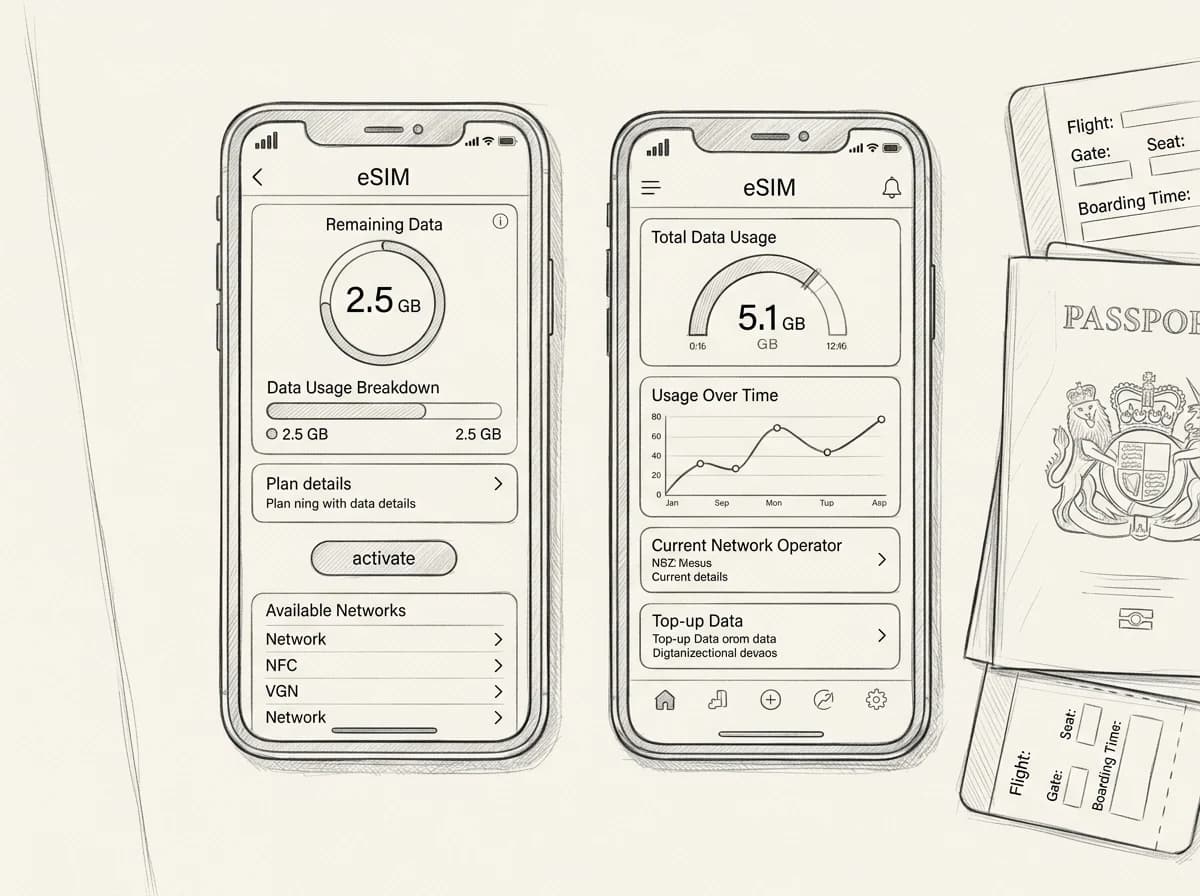
Holafly's Japan plan costs $27 for unlimited data — but "unlimited" throttles to 512 kbps after a daily soft cap that the fine print buries. At typical tourist usage of 1.5 GB/day over seven days, you're paying roughly $1.93 per effective GB before the speed floor kicks in. Airalo's Japan 10 GB / 30-day plan runs $13.50 — about $1.35 per GB, no throttle.
The unlimited framing hides a real cost structure. GSMA Intelligence's 2025 eSIM pricing benchmarks show that unlimited-branded plans across Asia-Pacific carry a 40–60% price premium over equivalent volume plans when measured against median daily consumption (GSMA Intelligence 2025). That premium buys peace of mind, not bandwidth.
Practical rule: If you stream video or use turn-by-turn nav daily, calculate your realistic GB need first — then check whether a volume plan covers it at lower cost. The Roamfly pricing guide walks through exactly that math.
Unlimited sounds safer. The numbers usually disagree.

Practical rule: If you'll use more than 3 GB in 7 days — streaming, hotspot, heavy Maps — Holafly's unlimited pricing starts to look reasonable. Below 3 GB, a capped Airalo or Roamfly plan will cost you $10–15 less for identical performance.
Coverage depth: which networks each provider actually rides
Airalo claims 190+ countries; Holafly covers around 165 (Airalo coverage page). Raw country count flatters both — the real question is which MNO each provider actually partners with inside those borders.
In Japan, Airalo routes most plans through NTT Docomo, the strongest macro grid in the country. Holafly typically lands on SoftBank, which trails Docomo by roughly 15 Mbps median 5G throughput (Ookla Speedtest Global Index 2025). That gap is invisible in Shibuya; it shows up in rural Hokkaido or Tohoku mountain passes.
The sharper difference surfaces in Southeast Asia and sub-Saharan Africa. Airalo holds agreements with local MNOs in markets like Bangladesh, Sri Lanka, and Ghana — Holafly's coverage stops entirely at several of those borders. South America is where Holafly narrows the gap, particularly Colombia and Argentina, where its unlimited structure suits spotty 4G handoffs better than a capped plan would.
For South Korea specifically, network quality matters more than price: Roamfly's South Korea eSIM pins to SK Telecom, consistently the fastest host MNO in Seoul's metro system — something neither Airalo nor Holafly guarantees at checkout.
Airalo vs Holafly: Key differences
| Factor | Airalo | Holafly |
|---|---|---|
| Pricing model | Pay per GB | Unlimited data, flat fee |
| Value for light users | Cheaper for under 3 GB | Overpay on unused data |
| Value for heavy users | Costs scale up fast | No overages ever |
| Number of countries | 190+ | 160+ |
| Top-up option | Buy a new plan in-app | No mid-trip top-up |
Installation and activation: what can go wrong
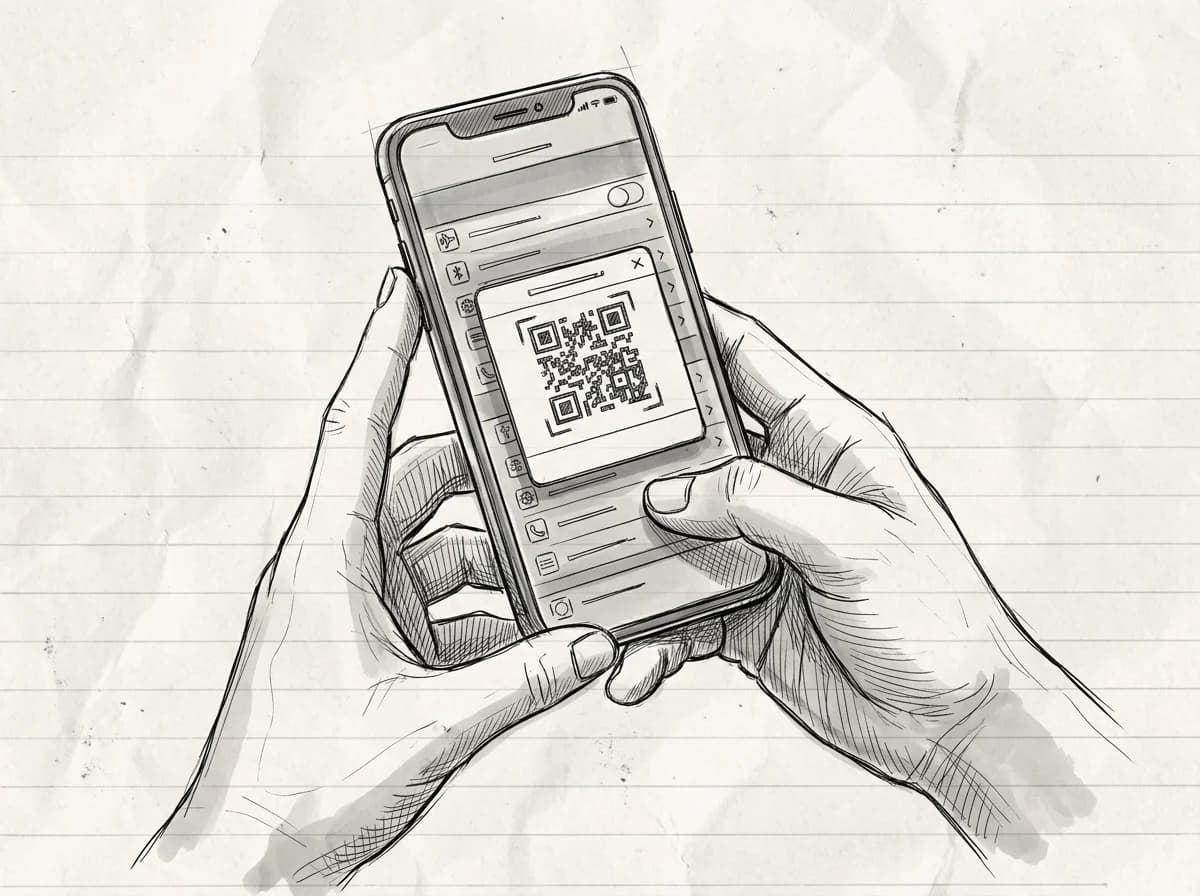
Both providers use QR-code activation — and both trip over the same three failure points: an eSIM slot already locked to a carrier, a device not yet unlocked, or a QR scan attempted on a screenshot instead of a printed or second-screen image.
iOS handles eSIM management cleanly in Settings > Cellular > Add eSIM. Android fragments the path across manufacturers — a Samsung Galaxy finds the option under Connections > SIM Manager, while a Pixel buries it in Network & Internet > SIMs. If the QR scan fails on either platform, switching to manual entry (SM-DP+ address + activation code) usually resolves it; the manual install guide walks through each field.
APN misconfiguration is the quietest failure mode. Data shows "Connected" but nothing loads — fix that by entering the APN string the provider specifies, exactly, with no trailing spaces.
Practical rule: Download the eSIM profile on Wi-Fi before you leave home. Activation mid-flight or at a dead-zone border crossing removes your fallback if something goes wrong.
One quirk specific to Holafly: their unlimited plans occasionally require a second APN profile for MMS, separate from data. Airalo's setup is single-profile across most destinations.
Pick the right provider before you buy
- Estimate your daily data use honestly
- Check both providers cover your exact destination
- Confirm your phone is unlocked and eSIM-capable
- Read the fair-use policy on any unlimited plan
- Buy on home Wi-Fi before you reach the airport
Practical rule: Scan the QR code before you board, not at the gate. iOS requires a Wi-Fi or cellular connection to download the eSIM profile — once you're in airplane mode at 35,000 feet, the scan completes but the profile won't install until you land.
Get connected before you leave
Neither Airalo nor Holafly ships a plan in under five minutes for every destination — but Roamfly does, with carrier-matched packages across 190+ countries and no-login activation QR codes delivered to your inbox instantly.
If you read this article because you're leaving soon, that's the only number that matters: five minutes from purchase to QR code, ready to scan before you board. Roamfly's plans are priced per GB with hard data caps, so you know exactly what you're paying — no "unlimited" asterisks hiding throttle thresholds.
Heading somewhere specific? Roamfly's 15-day UAE eSIM is a useful benchmark: clear GB allocation, a named host carrier, and a single APN profile that works on arrival without a second setup step.
Ready to get connected? Browse Roamfly's full catalog and get your QR code in under 5 minutes.
Stop comparing. Pick your destination, buy the plan, and scan the code at the gate.
Frequently asked questions
Is Holafly unlimited data actually unlimited or does it get throttled?
Holafly's plans are unlimited in volume but capped at a fixed speed — typically 128 Kbps after a soft threshold (Holafly fair use policy) that varies by destination plan. That's enough for messaging but not video calls or navigation. For data-heavy trips, a metered Airalo plan with full-speed LTE often delivers a better real-world experience.
Is Airalo cheaper than Holafly for a 7-day trip to Europe?
For most trips under 10 GB, yes. Airalo's Europe regional plan runs roughly $17–$22 for 10 GB over 30 days. Holafly's 7-day unlimited Europe plan costs around $27. If you're streaming heavily and will burn past 15 GB, Holafly's flat rate wins — otherwise Airalo's per-GB pricing is lower.
What happens if my eSIM stops connecting mid-trip?
First, toggle airplane mode off and on to force a network re-registration. If that fails, go to Settings → Cellular → select the eSIM → Network Selection → disable automatic and manually pick a local carrier. Both Airalo and Holafly support chat assistance, though response times vary; Airalo's in-app chat typically responds within 10–15 minutes.
Does Roamfly offer regional multi-country plans the way Airalo does?
Yes. Roamfly carries regional bundles covering Europe (44 countries), Southeast Asia, and Latin America — structured the same way as Airalo's regional packages, with a single QR code covering the whole region. Validity windows run 15 or 30 days depending on the plan tier you choose.
Can I get a refund on an eSIM I purchased but never activated?
Policies differ by provider. Airalo offers refunds on unactivated plans within 30 days of purchase (Airalo refund policy), subject to a review. Holafly's refund window is 14 days and requires the plan to be completely unused. Roamfly refunds unactivated plans within 30 days — contact support with your order number before scanning the QR code.