eSIM vs physical SIM for travel: a real price breakdown by trip length, destination, and data need — so you know exactly which option costs less.
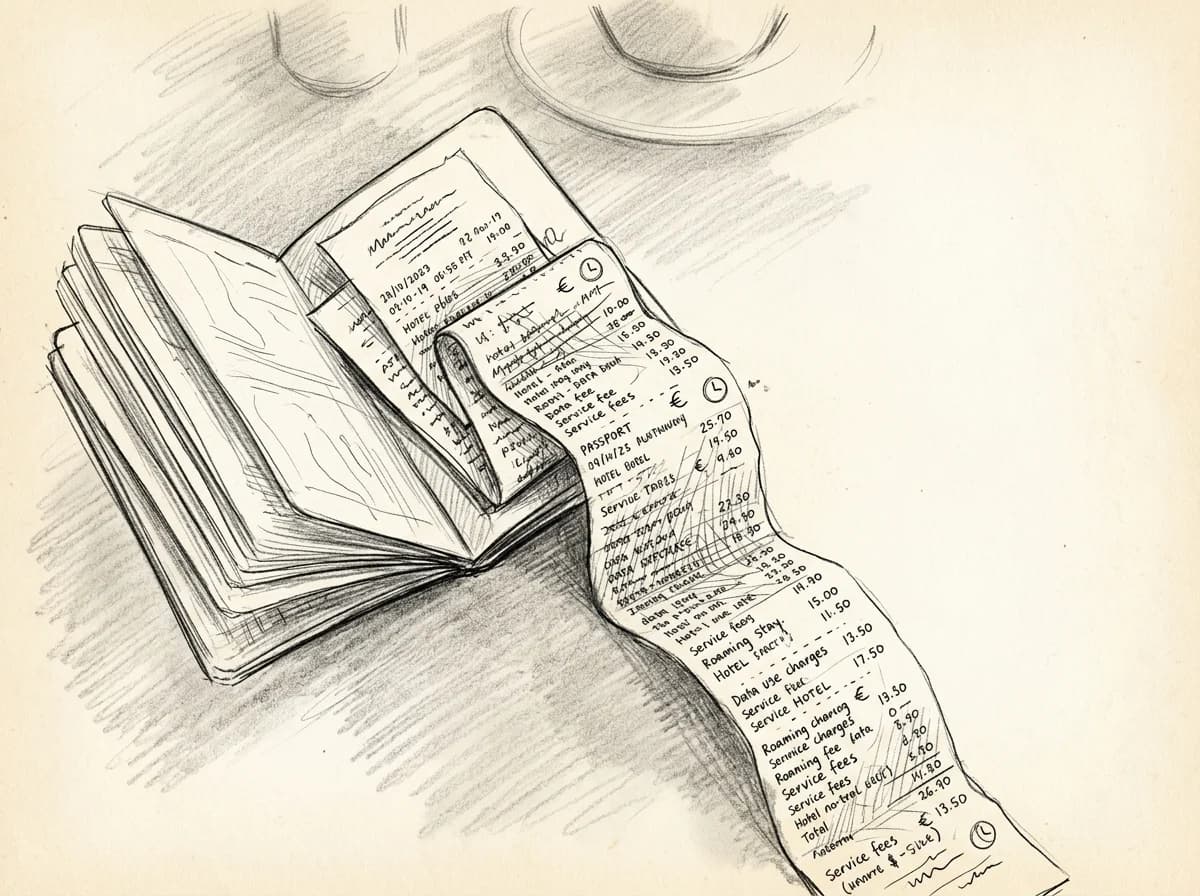
Verizon's TravelPass costs $10 per day. AT&T's International Day Pass runs $12. (Verizon TravelPass and AT&T International Day Pass rate pages) Spend ten days in Tokyo or Barcelona on either plan and you've quietly paid $100–$120 before a single coffee appears on your card — and that meter runs whether you stream one video or twenty (Verizon TravelPass and AT&T International Day Pass rate pages).
The alternative isn't one thing. It's two: an eSIM you load onto your phone before departure, or a local physical SIM you pick up at the airport kiosk after landing. Both can cut that daily rate to almost nothing — a 3 GB Albania plan on Roamfly runs $5.04 for a full week, which is less than half a single AT&T day — but they don't suit the same traveler or the same trip.
That gap is what this comparison resolves. Price structure, hidden fees, and the scenarios where each option actually wins are all covered in the sections below. The pricing explainer has the full breakdown of how Roamfly calculates per-GB cost if you want the arithmetic first.
How the costs actually stack up: eSIM vs physical SIM
Albania's airport kiosk SIM runs $8–$12 for a comparable 3 GB package. Roamfly's Albania plan delivers the same 3 GB over 7 days for $5.04 — ordered from your couch, active before the wheels touch Tirana.
The table tells the full story:
| Destination | eSIM (Roamfly) | Airport / local SIM | Difference |
|---|---|---|---|
| Albania | $5.04 / 3 GB / 7 days | ~$10 / 3 GB | Save ~$5 |
| UAE | $9.00 / 5 GB / 7 days | ~$16 / Etisalat tourist SIM | Save ~$7 |
| South Korea | $8.50 / 5 GB / 10 days | ~$13 / KT airport kiosk | Save ~$4.50 |
The UAE gap is worth flagging: Roamfly's UAE eSIM undercuts the standard Etisalat tourist package by roughly 44%, and you skip the 20-minute queue at Dubai International's T3 arrivals hall.
Practical rule: If the airport kiosk price is your benchmark, add $5–8 for the queue tax — the time and stress of buying a physical SIM on arrival has a real cost, especially on a tight connection.
Global roaming prices dropped 18% between 2022 and 2024, but airport retail held flat (GSMA Intelligence 2025 roaming price index). The kiosk hasn't passed those savings on. eSIM marketplaces did.
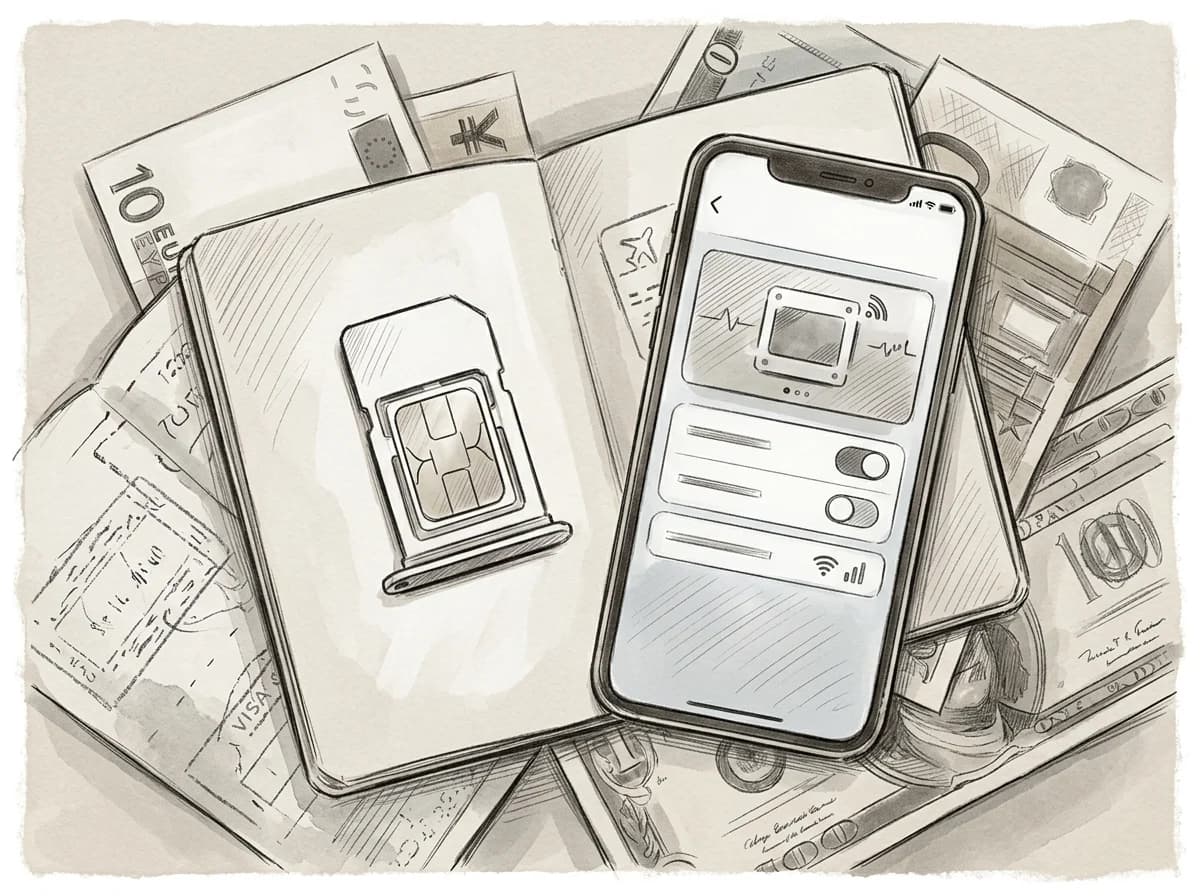
Practical rule: If your destination has a 7-day eSIM plan under $10 — Albania at $5.04, South Korea at comparable rates — book it before boarding. Airport kiosk prices for the same data run $8–15, and that gap only widens once you factor in the 30-minute queue at arrivals.
When a physical SIM still wins on price
Jaipur's local Airtel SIM runs about ₹299 (~$3.60) for 28 days and 2 GB daily — that's 56 GB for less than a single mid-range eSIM package. Vietnam's Viettel prepaid hits even harder: 4 GB/day for 30 days costs roughly $7 at any corner shop. When local prepaid is that cheap, the math is blunt.
The physical SIM earns its place in three specific situations: stays longer than 60 days (where eSIM validity windows force costly restacking), markets with hyper-local pricing like India, Vietnam, or Egypt where airport counters sell genuine value, and older devices — any iPhone below XS, most Android flagships before 2020 — that simply can't run an eSIM (Apple Support: eSIM-compatible iPhone models).
Note: Swapping SIMs between countries still adds friction — a lost tray pin in Hanoi or a carrier-locked slot can strand you — so factor that real-world risk against the price gap before choosing the physical route.
Physical also suits travelers carrying a dedicated travel phone bought cheaply abroad. Roamfly's Europe travel plans show where the crossover flips back in eSIM's favor once you're hopping borders every few days.
eSIM vs Physical SIM: Real Travel Costs
| Factor | Roamfly eSIM | Physical SIM |
|---|---|---|
| Setup time | 2 min, before you fly | 30–60 min at a kiosk |
| Roaming on arrival | Active instantly | Queue, then configure |
| Keeps home number | Yes, via dual-SIM | No — swap required |
| Price transparency | Fixed before departure | Varies by vendor/airport |
| Hidden fees | None after purchase | Top-up, adapter costs |
Hidden costs that tip the math toward eSIM
Skipping the airport kiosk sounds trivial until you price the detour. At Narita, the nearest off-terminal SIM shop sits a 15-minute train ride from the arrivals hall — add ¥300 each way, 40 minutes of your first afternoon, and a queue that runs 20–30 minutes on peak days. That's nearly an hour of vacation, gone before you've seen a single temple.
The smaller costs compound too. A SIM-eject tool runs $4–8 at most airport electronics stalls, and losing your physical card mid-trip — not rare when you're swapping trays in a Chiang Mai guesthouse — means repeating every minute of that process at the destination end. Kiosk stock-outs are real: some pop-up counters in European airports sell out by midday on summer Fridays.
Practical rule: If your layover is under 90 minutes or you're arriving after 9 pm, a physical SIM vendor is a gamble. An eSIM activates on the jet bridge. eSIM adoption is accelerating fast precisely because travellers have done this math (Juniper Research 2024 eSIM adoption forecast).
Japan is a clean case study — Roamfly's Japan eSIM activates before your bags reach the carousel.
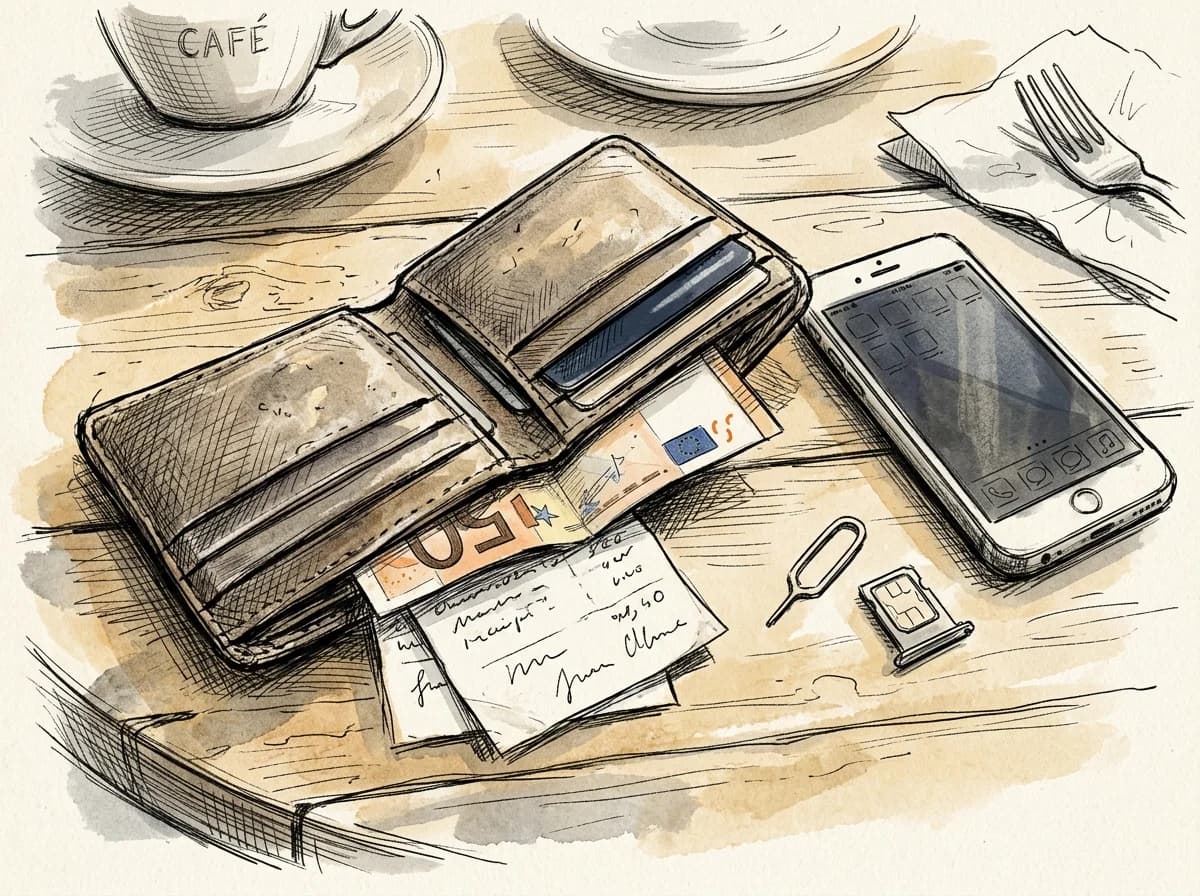
When a Physical SIM Beats eSIM on Price
- Trip is 30+ days in one country only
- Local carrier has superior rural coverage
- Airport SIM costs under $5 with 10 GB+
- Your phone is single-SIM or eSIM-locked
- A local store is easy to reach on arrival
Practical rule: A physical SIM beats an eSIM on price only when your stay exceeds 60 days or you're in a market like India or Vietnam where a 30-day local prepaid costs under $4. Below that threshold, the taxi fare to an off-airport vendor alone erases the savings.
Get connected before you leave
Roamfly's UAE eSIM runs $6.50 for 3 GB over 7 days — active within minutes of purchase, no post office queue in Dubai Terminal 3 required. South Korea moves even faster: the 7-day South Korea plan delivers 5 GB for $8.50, ready before your KTX train leaves Incheon Airport station.
Both plans activate the same way — QR code scan, carrier profile installs, done. Your physical SIM slot stays free for a local number if you need one.
The catalog covers 150+ countries on the same model: buy, scan, connect. No markup at a airport kiosk. No hunting for a nano-SIM cutter at 11 p.m.
Ready to get connected? Browse Roamfly's full eSIM catalog and activate in under 5 minutes — from anywhere, before you board.
Related guides
Frequently asked questions
Is an eSIM always cheaper than a local SIM card for travel?
Not always. For trips under 7 days in a single country, a local SIM bought at a street kiosk — say, a ¥1,500 IIJ card in Tokyo or a €5 Orange SIM in Paris — can undercut prepaid eSIM pricing. The eSIM advantage grows on multi-country trips or when you factor in airport convenience-pricing surcharges.
At what point does a physical SIM become better value than an eSIM?
The math typically flips for stays longer than 21 days in one country. Local carriers sell 30-day SIMs with unlimited or near-unlimited data for prices eSIM marketplaces rarely match — a Jio 28-day plan in India runs under $4 USD. Below three weeks, the price gap is narrow enough that eSIM convenience wins.
Do eSIM plans charge extra for 5G access, or is it included?
Most Roamfly plans include 5G where the host carrier supports it — no separate tier or surcharge. Coverage depends on the destination network: NTT Docomo in Japan and T-Mobile in the US deliver broad 5G. Check the plan detail page for confirmed 5G availability before buying.
Can I use an eSIM for data and still receive calls on my home number?
Yes, on any dual-SIM phone. iPhone XR and later, Pixel 4 and later, and Samsung Galaxy S20+ all support simultaneous eSIM + physical SIM (Apple Support: Use Dual SIM with an eSIM). Set your home SIM as the default for Voice and SMS, and the travel eSIM as the default for Cellular Data — both stay active at the same time.
Which is cheaper for two weeks in Japan — a Roamfly eSIM or an airport SIM kiosk?
Airport SIM kiosks at Narita and Haneda typically price a 15-day data SIM between ¥3,500 and ¥5,000 (roughly $23–$33). Roamfly's 15-day Japan plan starts lower and activates before you board — no queue, no kiosk surcharge. For a 14-night stay, the eSIM route saves $5–$12 on average.