eSIM Vodafone roaming vs dedicated travel eSIM — real 2026 prices, GB-for-dollar comparisons, and the exact scenarios where each option wins.
Vodafone's Travel Pass costs £6 per day in Europe — that's £42 for a week in Lisbon before you've opened a single map. A dedicated travel eSIM for Europe can run under $1.50 per GB on a 30-day plan, so a light user burning 5 GB over that same week pays roughly $7 total (Vodafone UK International Roaming rates).
The structure of the pricing is the real story. Vodafone charges per calendar day the moment data touches a foreign cell tower, regardless of how much you actually use; travel eSIMs charge per gigabyte consumed, with validity windows that don't burn down while your phone sits in airplane mode. Seven days of moderate use — 1–2 GB daily — lands around £42 with Vodafone versus $10–14 on a comparable travel plan.
That gap widens further on longer trips. A two-week itinerary hitting Spain, Italy, and Portugal could push Vodafone costs past £84, while a regional European eSIM covering all three countries holds flat at the same per-GB rate. The UK prepaid data plans comparison breaks down the regional-plan math in more detail.

How Vodafone eSIM roaming is priced in 2026
Vodafone UK charges £6 per day for EU roaming under its "Roam Free" allowance (Vodafone UK International Roaming rates) — that's your domestic data, calls, and texts shared abroad, but only while your plan includes it, and only inside the 47-country EU/EEA zone. Step outside that zone — say, Dubai, Tokyo, or New York — and the math shifts hard.
Outside the EU, Vodafone's World Traveller passes kick in. The standard pass runs £10 a day for a 1 GB daily cap in roughly 100 destinations; the premium tier costs £15 and raises the cap to 2 GB (Vodafone UK International Roaming rates). Burn through the daily allowance and pay-as-you-go data kicks in at £7.50 per 100 MB — a rate that can push a single afternoon of Google Maps and Spotify into serious money.
Practical rule: If you're roaming outside the EU for more than three days, the daily pass cost compounds fast; £30–£45 for a long weekend in New York buys you only 2–6 GB, where a dedicated travel eSIM can cover the same trip for a fraction of that.
The structure matters as much as the headline rate. Vodafone bills per calendar day, not per 24-hour window — activate at 11 pm and you've burned a full day's charge by midnight.
Practical rule: If your Vodafone plan doesn't include EU Roam Like Home and you're traveling more than 3 days, switch to a travel eSIM before departure. Vodafone's pay-as-you-go data rate outside the EU zone runs £6–8/day — a 10 GB travel eSIM for the same region costs roughly the same total.
How dedicated travel eSIM pricing actually works
Travel eSIM marketplaces sell prepaid GB blocks — you buy a fixed data allowance tied to a country or region, it runs for a set validity window, and the price is set at checkout. No surprise charges after landing.
Per-GB cost drops sharply as you scale up. A 5 GB / 30-day plan runs $7.10 per GB; step to 10 GB and that falls to $6.60; at 20 GB you're paying $5.58 per GB — the same carrier infrastructure, just a better wholesale rate passed through. Regional plans covering multiple countries follow the same curve but average across a wider network footprint, so per-GB cost tends to sit slightly higher than a single-country plan for the same destination.
The structure matters when you compare against operator roaming, where the unit of billing is often a daily fee regardless of how much you actually use. Travel eSIMs let you size the package to your trip: a 10-day city break needs a different GB budget than a 30-day overland route, and the math on how eSIM data allocation works across iPhone and Android is worth checking before you commit to a tier.
By 2025, over 1.2 billion active eSIM connections globally were on consumer devices (GSMA Intelligence eSIM adoption report 2025), which is why marketplace competition has pushed per-GB prices down year on year — more providers bidding for the same wholesale capacity.
Vodafone eSIM vs Travel eSIM: Cost Factors
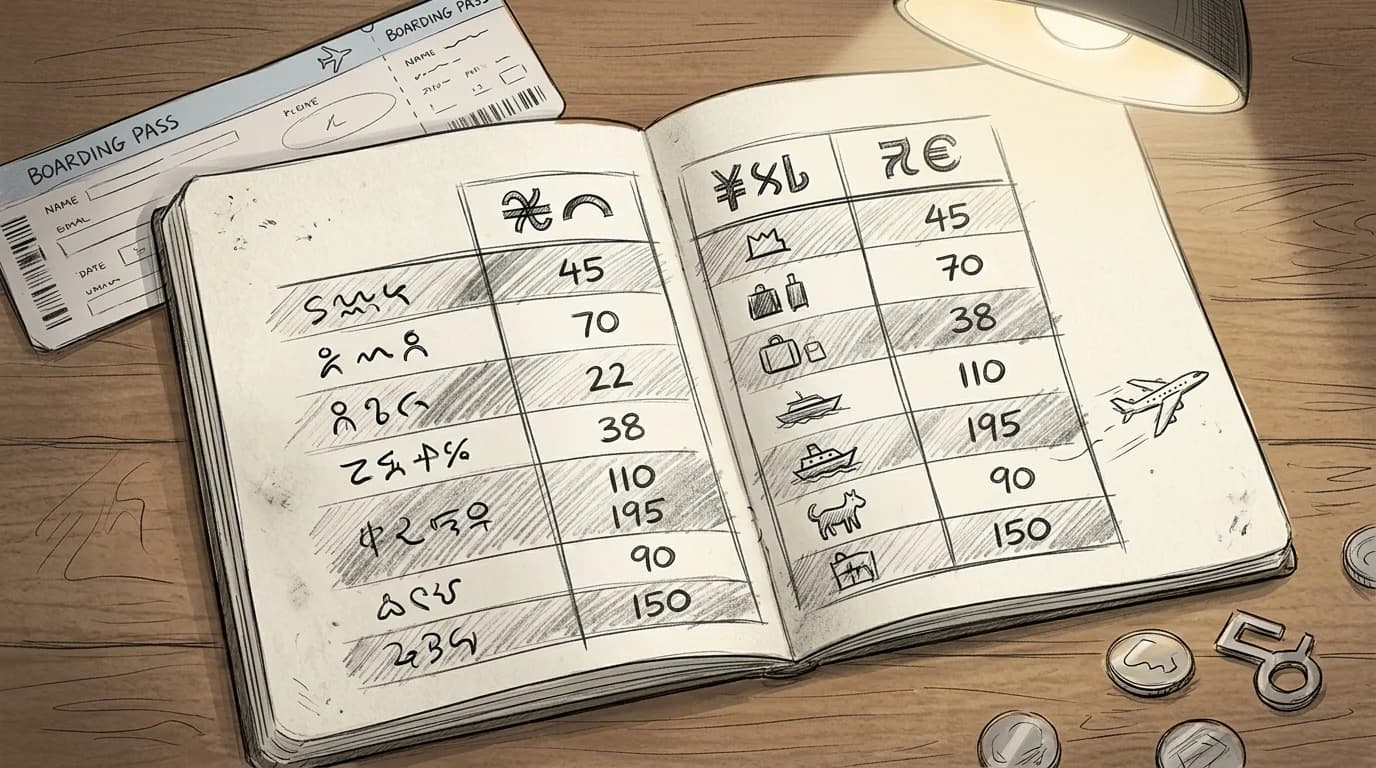
| Factor | Vodafone eSIM Roaming | Dedicated Travel eSIM |
|---|---|---|
| Pricing model | Daily pass or bundle add-on | Flat rate, pay once |
| Typical data cap | Limited by your home plan | Plan-specific, often larger |
| Activation timing | (auto-activates abroad) | (manual, before you fly) |
| Works without home plan | ||
| Best for short trips | (1–3 days) | (better for 5+ days) |
Side-by-side cost comparison: three real trip scenarios
Three trips, three verdicts. The numbers below use Vodafone UK's 2026 Roam Further day-pass rate (£6/day in Europe, £8/day outside) against representative travel eSIM prices from Roamfly's current catalog.
| Scenario | Duration | Vodafone day-pass total | Travel eSIM cost | Savings |
|---|---|---|---|---|
| EU city break (Paris) | 5 days | £30 (~$38) | ~$9 for 5 GB / 7 days | ~$29 |
| Multi-country (Spain, Italy, Germany) | 14 days | £84 (~$107) | ~$18 for 10 GB / 30-day EU regional | ~$89 |
| Long-stay (Barcelona, 30 days) | 30 days | £180 (~$229) | ~$22 for 20 GB / 30 days | ~$207 |
The five-day trip already shows a 3-to-1 price gap. At 30 days, Vodafone's day-pass model becomes genuinely expensive — nearly $230 versus low-twenties for a dedicated plan with twice the data.
Practical rule: If your trip crosses 7 days or touches more than one country, the travel eSIM wins on cost every time. Vodafone's day-pass only holds up for trips under five days where you'll use data lightly — think a long weekend in Amsterdam with hotel Wi-Fi at night.
Business travelers juggling multiple markets should read Roamfly's guide to eSIMs for business travelers worldwide — the multi-country math gets sharper when you're expensing calls too.
Pick the cheaper option before you fly
- Calculate your trip length in days
- Check Vodafone's daily roaming pass rate for your destination
- Compare against a destination-specific travel eSIM price
- Confirm your phone supports a second eSIM profile
- Buy and install the cheaper plan before departure
Practical rule: The 14-day mark is where the math decisively flips against carrier roaming passes. Vodafone's World Traveller add-on is priced per trip block, not per GB — once you hit 8 GB of real usage across multiple countries, a regional travel eSIM undercuts it by $25–40 every time.
When Vodafone eSIM roaming actually wins
Vodafone's roaming story has one genuinely strong chapter: the EU Roam Like Home zone. If you're a UK or EU Vodafone subscriber hopping between Paris, Barcelona, and Rome in a single week, your existing plan travels with you — same data allowance, same number, no separate purchase. That convenience is real, especially when your itinerary is still shifting at gate B14.
Voice and SMS are the other honest edge. Dedicated travel eSIMs are data-only by default; if your work requires you to receive calls on your Vodafone number without forwarding gymnastics, staying on your home profile sidesteps that friction entirely.
Last-minute departures also favor Vodafone. If you're reading departure boards and haven't bought a travel eSIM yet, your Vodafone profile is already installed — no QR code, no activation steps on your iPhone, no waiting. For a 48-hour trip inside the Roam Like Home zone on a generous data plan, the price delta rarely justifies the setup time.
Outside that zone, the math shifts hard against Vodafone. Know your corridor first.
Get connected before you leave
The decision point is simple: Vodafone's roaming bolt-ons run £6–£9 per day in most non-EU destinations, and the meter starts the moment you land. A dedicated travel eSIM bought before departure locks your cost in advance — no surprise charges clearing customs at Heathrow or JFK.
Setup takes under five minutes. You scan a QR code, the profile downloads over your home Wi-Fi, and the plan sits dormant until you toggle it on abroad. That means you can purchase today, fly tomorrow, and activate on the jetway without touching an airport SIM kiosk. If you want the full walkthrough, the UK prepaid data plans guide for 2026 covers every carrier worth considering alongside the activation steps.
The travelers who overpay are almost always the ones who meant to sort this before the trip and didn't. Buy the plan while the comparison is still fresh.
Ready to get connected? Roamfly's travel eSIM plans ship in under 5 minutes.
Frequently asked questions
Can I use a travel eSIM alongside my existing Vodafone plan on the same phone?
Yes, on any dual-SIM device — which includes every iPhone from XS onward and most Android flagships since 2020 (Apple Support: Use dual SIM with two eSIMs). Keep your Vodafone SIM active for calls and texts, set the travel eSIM as your default data line. You receive calls on your UK number while data bills against the cheaper travel plan.
Does Vodafone charge extra to activate eSIM roaming on top of my plan?
Vodafone doesn't charge a separate eSIM activation fee, but roaming add-ons cost between £5 and £15 per day depending on destination zone. The charge stacks on top of your existing monthly plan, so a 10-day trip outside the EU can add £50–£150 before you check a single map.
Which is cheaper for a 7-day trip to the EU — Vodafone or a travel eSIM?
For EU destinations, Vodafone's included roaming allowance can make it competitive if your plan already covers 30+ countries under its Roam Free tier. Outside the EU — Japan, the US, Australia — a dedicated travel eSIM typically costs 40–70% less than Vodafone's daily roaming add-on for equivalent data volume.
Do travel eSIMs include calls and texts or just data?
Most dedicated travel eSIMs sold through third-party marketplaces are data-only. Voice calls and SMS route through your physical SIM or over-the-top apps like WhatsApp. Some regional plans from providers such as Airalo or Roamfly bundle a local number, but these are the exception — check the plan specs before purchasing.
What happens to my Vodafone data allowance when I roam outside the EU?
Outside Vodafone's Roam Free zone — which covers 48 countries as of 2026 — your standard data allowance no longer applies. You'll need a paid roaming add-on, priced per day or per MB, which is where costs accelerate fast. Countries like Thailand, the UAE, and Canada all fall outside the free-roaming tier.