
Compare eSIM Europe travel plans for 2026 — regional vs country-by-country, real prices, and which plan wins for multi-stop trips across AT, BE, BA, and beyond.
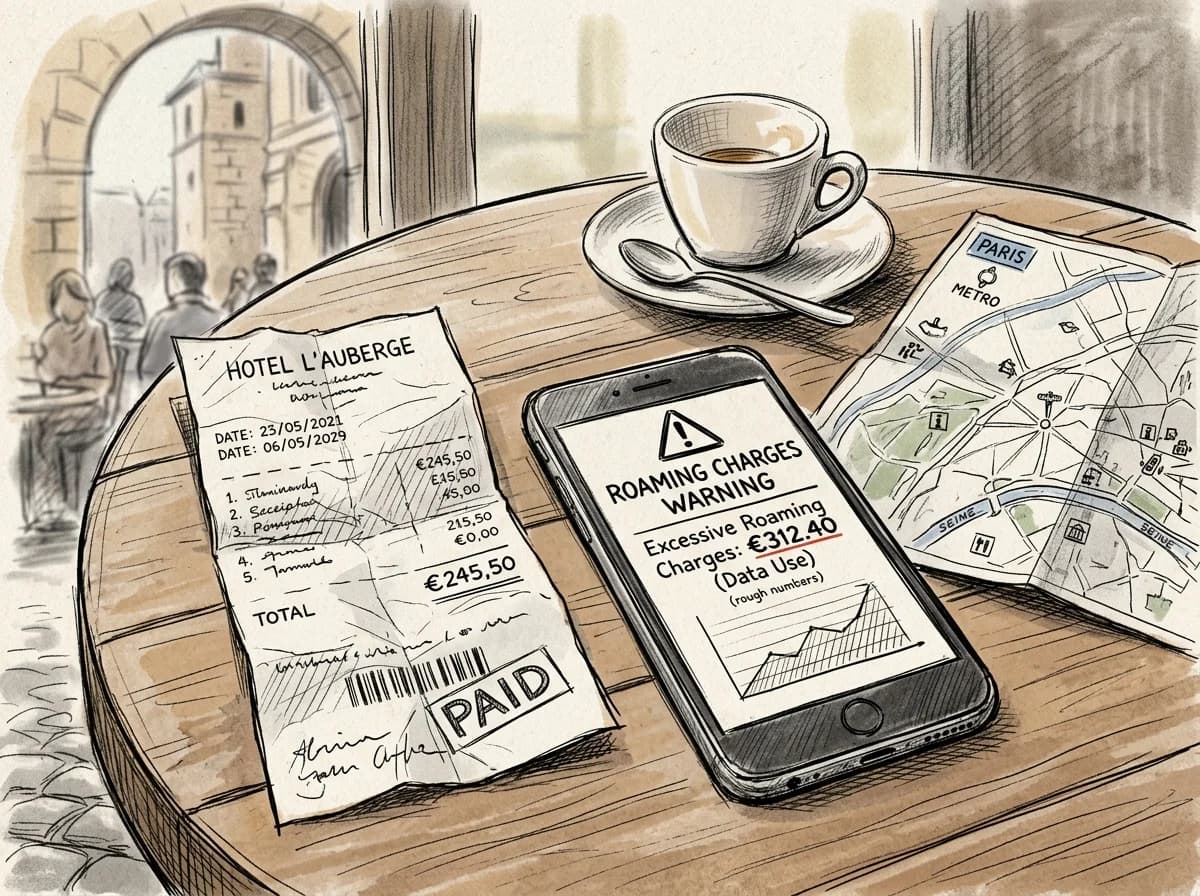
AT&T's International Day Pass costs $10 per day. T-Mobile's Go Next add-on runs $15. Spend two weeks in Portugal, France, and Spain and you're looking at $140–$210 billed silently to your account — before a single data-heavy map session in a Lisbon backstreet.
Carrier roaming works by converting every foreign SIM handshake into a daily toll, regardless of how little data you actually use; a 48-hour layover in Paris costs the same as a full itinerary day in Barcelona. Regional eSIM plans for Europe flip that logic entirely — you pay once for a data bucket, not per calendar day. The gap is significant: a 10 GB / 30-day regional plan on Roamfly runs under $20, documented clearly on the pricing explainer.
Roaming markup rates across G20 carriers averaged 340% above local wholesale data costs in 2025 (GSMA Intelligence 2025 roaming rate benchmarks). Your carrier is not passing savings along. That markup is the problem esim europe travel plans 2026 buyers are actively solving.
Regional plan vs country plan: how to choose
Three countries in two weeks — Austria, Belgium, and a long weekend in Bosnia — and a single regional plan covers all of it without swapping profiles. That's the core case for going regional.
The math is simple. If your itinerary touches three or more countries inside 21 days, a regional Europe plan almost always costs less per GB than stacking individual country SIMs, and you eliminate the dead-validity problem: a 7-day Albania plan bought for a 4-day stop burns three paid days while you're already in Bulgaria. Regional coverage on Roamfly's Europe plans extends across 40+ countries — including smaller stops like Andorra, Azerbaijan, Belarus, and the Balkans (Albania, Bosnia, North Macedonia) that solo-country eSIMs rarely serve cleanly.
Practical rule: Single-country plans flip the value equation only when your trip is 14+ days in one place and you need high data volume — a month in Vienna on a local AT plan will consistently beat a regional rate per GB.
Country plans do win on one axis: price per GB for long, stationary trips. For everything else, regional holds. Check Roamfly's pricing breakdown before committing to either structure.

Practical rule: If your itinerary crosses three or more countries in under 21 days, a regional Europe eSIM wins on cost and simplicity every time. The math flips only when you spend 10+ days in a single country like Austria or Bulgaria — then a local plan's stronger network tie-ins justify the switch.
Network coverage country by country: what to expect in 2026
Austria clocks a median LTE download of 54 Mbps; Belgium sits at 61 Mbps — both comfortably above the European average of 47 Mbps (Ookla Speedtest Global Index 2025). You'll stream, navigate, and upload without throttling anxiety in Vienna or Brussels.
The Balkans are a different story. Bulgaria's urban corridors (Sofia, Plovdiv) hit respectable 4G speeds, but rural stretches toward the Greek border drop to 10–15 Mbps or less. Bosnia-Herzegovina is patchier still — Sarajevo's city center holds up, while the road to Mostar can go dark in tunnels. Albania has improved sharply along the Riviera coast, though the mountainous northeast remains mostly 3G. Andorra runs on roaming agreements with Spanish and French carriers, so expect solid 4G in Andorra la Vella but nothing beyond it.
One consistent issue across all six countries: carrier congestion at peak tourist hours. If your speeds feel wrong after activation, the slow-speeds troubleshooting guide walks you through APN resets and manual network selection — two fixes that solve 80% of cases.
Regional eSIM vs Country eSIM: Europe
| Factor | Regional eSIM | Country eSIM |
|---|---|---|
| Best for | 3+ countries, one trip | Single destination stay |
| Cost efficiency | Lower per-country cost | Cheaper for one country |
| Setup hassle | One QR, done | New plan per country |
| Coverage gaps | Rare, partner networks fill in | within that country |
| Validity flexibility | Shared days across all stops | Days burn in one country |
How to install and activate before or after you land
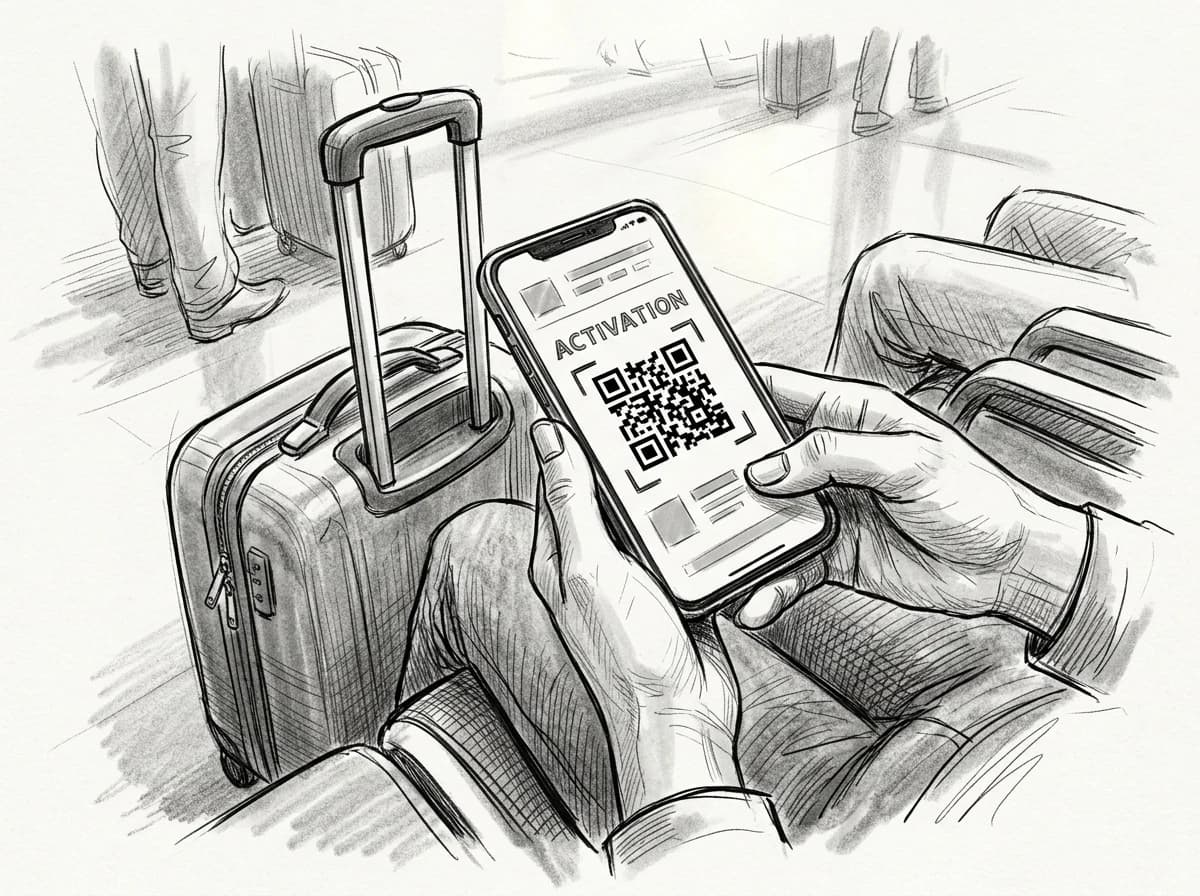
Scan the QR code at home, not at Charles de Gaulle with a dead battery and a customs queue behind you. Download takes under 90 seconds on any stable Wi-Fi; the eSIM profile sits dormant on your device until you switch it on.
On iPhone, go to Settings → Cellular → Add eSIM → Use QR Code. Android varies by manufacturer — Samsung buries it under Connections → SIM Manager, while Pixel puts it one level shallower at Network & Internet → SIMs (Apple Support — Use eSIM on iPhone). If the QR scan fails, every Roamfly plan ships with a manual activation code as a fallback — same screen, "Enter Details Manually."
Practical rule: Toggle the eSIM on *after* the wheels touch down, not before. Some European carriers won't assign a local IP until your device registers on a ground-based tower, and activating mid-Atlantic burns part of your 30-day validity clock for nothing.
Keep your home SIM active for iMessage and calls. Set the eSIM as data-only default and you're done. Full setup walkthrough in the manual installation guide.
Before Your Europe Flight: eSIM Checklist
- Confirm your phone is unlocked and eSIM-capable
- Purchase your plan on home Wi-Fi
- Download and save the QR code screenshot
- Install the eSIM profile before boarding
- Toggle eSIM data off until you land
- Activate the moment wheels touch down
Practical rule: Install the QR code at home on Wi-Fi, but leave the eSIM toggled off until the captain announces descent into your first European city. Activating on the ground at Charles de Gaulle or Vienna Schwechat triggers your validity clock — and most 7-day plans start counting from first network registration, not first data use.
Get connected before you leave
Roamfly's catalog covers 190+ destinations — including a dedicated Vatican City State plan for the rare traveler who wants every country ticked. That kind of depth means you're not hunting across three storefronts before a 6 a.m. departure.
Activation takes under 5 minutes. Scan the QR code, confirm the APN settings, and your eSIM is live before you reach the gate. No post-office queues at Fiumicino, no €12 tourist SIMs from a vending machine at Charles de Gaulle.
The esim europe travel plans 2026 lineup spans single-country packs, regional bundles covering 30+ countries, and short-stay options as tight as 7 days — so whether you're crossing four borders in two weeks or planting yourself in Lisbon for a month, there's a validity window that fits.
Ready to get connected? Roamfly's Europe eSIM ships in under 5 minutes.
Ready to get connected? Roamfly's eSIM ships in under 5 minutes.
Frequently asked questions
Which phones support eSIM Europe travel plans in 2026?
All iPhones from XR (2018) onward, every Google Pixel from 4 onward, and Samsung Galaxy S21+ flagships support eSIM (Apple Support — eSIM-compatible iPhone models). On iPhone, check Settings → General → About → Available SIM; on Android, Settings → Connections → SIM Manager. If you see an option to add a plan digitally, you're compatible.
Can I use one regional eSIM across non-Schengen countries like Albania and Bosnia?
It depends on the plan's coverage list, not the Schengen border. Roamfly's Europe regional plans cover 36+ countries including Albania and Bosnia-Herzegovina via local roaming partners. Check the coverage tab before buying — a country marked 'roaming' may burn data faster than one marked 'local network.'
When should I activate my Europe eSIM — before I leave or at the airport?
Install the eSIM profile before departure while on home Wi-Fi, but leave activation until you land. The moment you turn off airplane mode in your destination country, the eSIM locks onto a host network automatically. Activating at home wastes validity days before your trip even starts.
What should I do if my eSIM shows 'No Connection' after landing in Vienna?
First, toggle airplane mode off and on to force a network scan. If that fails, go to Settings → Mobile Data (iPhone) or SIM Manager (Android) and confirm the Europe eSIM is set as your default data line. Still no signal? Manually select a carrier — in Austria, A1 and Magenta are the primary fallback networks.
Can I top up data without buying a completely new Europe plan?
Yes. Roamfly top-ups apply to the existing eSIM profile within 60 seconds — no new QR code, no reinstall. Top-ups also extend plan validity if the original window hasn't closed. The one exception: if your plan has fully expired, you'll need a new package rather than a top-up.