eSIM vs local SIM card — a straight comparison of cost, convenience, coverage, and which one wins for your next trip. No fluff, just the facts.
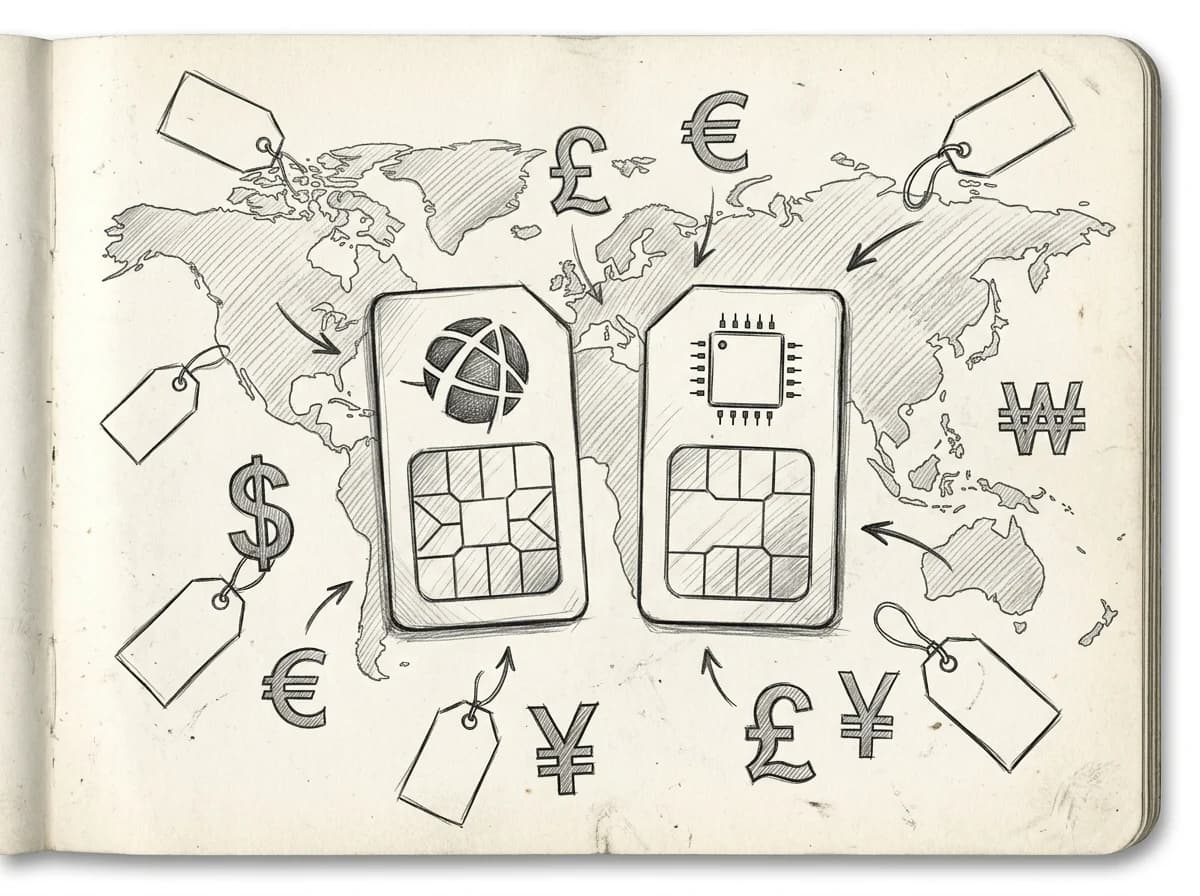
Incheon Airport's KT Roaming booth charges ₩33,000 (~$24) for 10 GB over 10 days (KT Roaming official tariff page). Roamfly's South Korea 7-day plan runs $9.90 for the same data tier — bought from your couch, activated before the plane lands.
The gap is consistent across markets. At Dubai International, a du Tourist SIM starts at AED 55 (~$15) for 5 GB with a 9-day expiry (du Tourist SIM product page); comparable eSIM packages for the UAE sit around $8–$11. Spain's airport kiosks at Barajas charge €15–€20 for a basic Movistar prepaid card — a 10 GB / 30-day eSIM for Spain costs roughly €9 equivalent through most marketplaces.
Practical rule: Factor in booth wait time. During peak arrivals at Incheon or Charles de Gaulle, SIM queues run 20–40 minutes — time you're paying for in a foreign airport with dead data.
The price premium on physical SIMs isn't just markup; you're paying for the retail shelf, the staff, and the tourist-trap location (GSMA Intelligence 2025 roaming cost report). eSIMs cut that chain entirely. Roamfly's South Korea 7-day plan is a clean example of where that saving lands.
Speed and coverage: does the network actually differ?
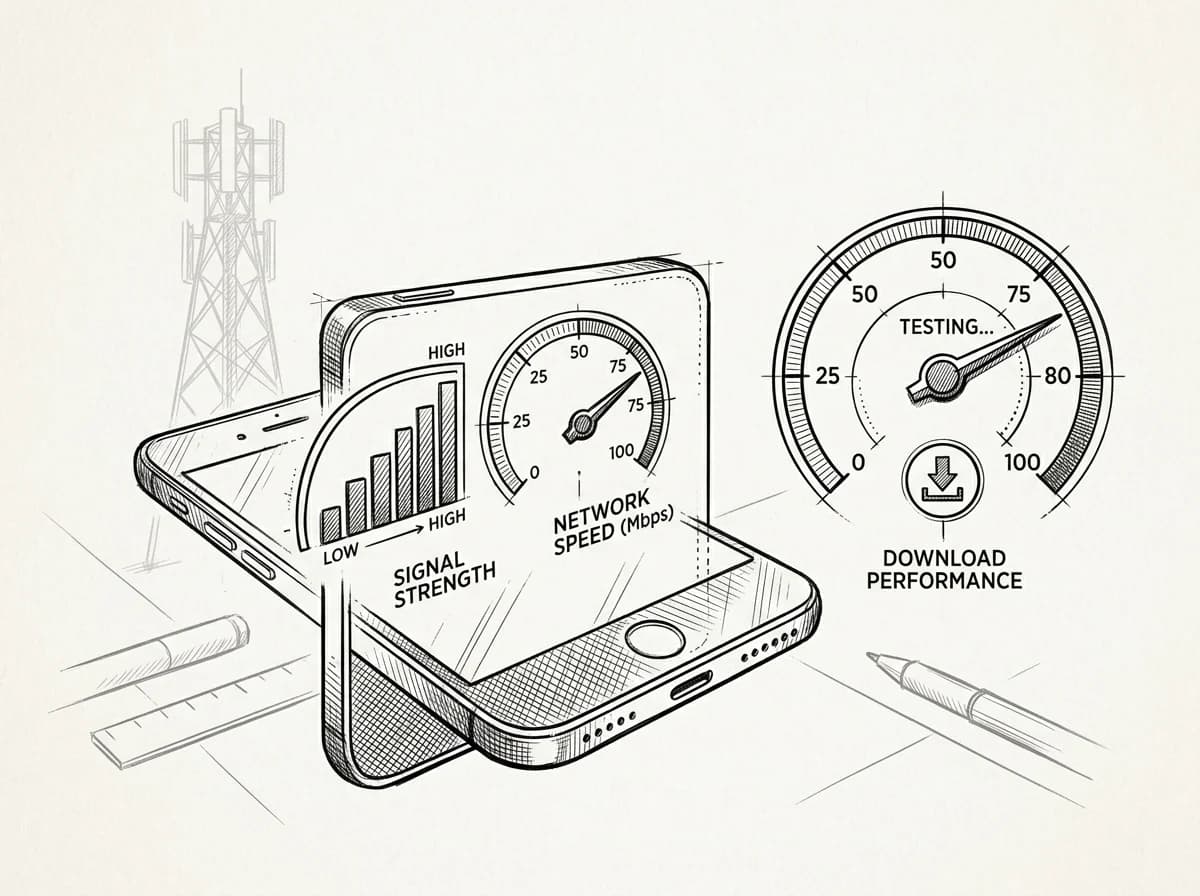
Local SIMs don't touch a private network. They ride the same towers — Jio in Mumbai, Telkomsel across Bali, du or Etisalat in Dubai — and so does every Roamfly eSIM plan. The underlying signal is identical.
Ookla's 2025 Speedtest Global Index shows the UAE averaging 197 Mbps median download on 5G (Ookla Speedtest Global Index 2025). A tourist buying a du SIM at Dubai International and a traveler who activated Roamfly's UAE eSIM before boarding both connect through du's grid. Same band. Same throughput.
Where a local SIM can pull ahead: a handful of budget eSIM providers throttle after a data threshold — say, 10 GB free then 512 Kbps. Check the fine print before you buy, not at the Arrivals hall. Speed loss on travel eSIMs almost always traces back to throttle clauses, not the MNO hosting the plan.
The network question is a red herring. Price, validity, and throttle policy are the real variables worth comparing.
When a local SIM card still wins
Three scenarios keep physical SIMs relevant in 2025. None of them are edge cases.
Trips longer than 30 days. Most eSIM plans cap validity at 15–30 days, so a two-month stint in Chiang Mai means stacking two or three packages — and paying for renewal gaps. A local DTAC or True Move H SIM bought at the airport for 299 THB (~$8) runs 60 days straight with 30 GB included (True Move H tourist SIM product page). The math is hard to argue with.
Countries with friction-heavy eSIM infrastructure. Vietnam requires in-person passport registration for any SIM, physical or digital — walk into a Viettel shop and you clear it in 10 minutes. Roamfly's Vietnam eSIM sidesteps that queue, but if you need a local number for restaurant bookings or Grab, a physical SIM still earns its place.
Local number requirements. Banking apps, Vietnamese ride-hailing, WhatsApp Business verification — they all want a local number for 2FA. An eSIM data plan gives you no callable number. For those cases, carry both: eSIM for data, local SIM in the second slot for calls.
eSIM vs Local SIM: Key Factors
| Factor | Roamfly eSIM | Local SIM |
|---|---|---|
| Setup time | 2 min, before you fly | 30–60 min at a kiosk |
| Keeps home number | Yes (dual-SIM) | No, number replaced |
| Coverage network | Partners with local carriers | Direct local carrier |
| Top-up method | In-app, instant | Find a store or vending machine |
| Works in multiple countries | regional plans available | One country only |
When eSIM is the faster, safer choice
Landing in Madrid at 1 a.m. with a dead phone and no local currency for a SIM vending machine is a specific kind of miserable. eSIM sidesteps it entirely — you activate before the flight, clear customs with Maps already running, and the cab to your hotel costs what it should instead of what you negotiate blind.
Multi-country trips are where the math tilts hardest. Crossing from Spain into Portugal and then Morocco means three separate SIM swaps with a physical card — three queues, three ID checks, three chances to lose a nano-tray screw in an airport bathroom. A regional eSIM covers the same ground from one app.
Practical rule: If your itinerary crosses two or more countries in under three weeks, buy a regional eSIM before departure. The per-day cost beats stacking country cards once you factor in the dead-validity days between legs.
Late-night arrivals, eSIM-only devices like the iPhone 15 bought in the US market (Apple support — iPhone models that support eSIM), and short 4-day stays in places like Dubai — where Roamfly's Spain eSIM logic applies just as cleanly to Gulf trips — all point the same direction. Speed beats ritual.
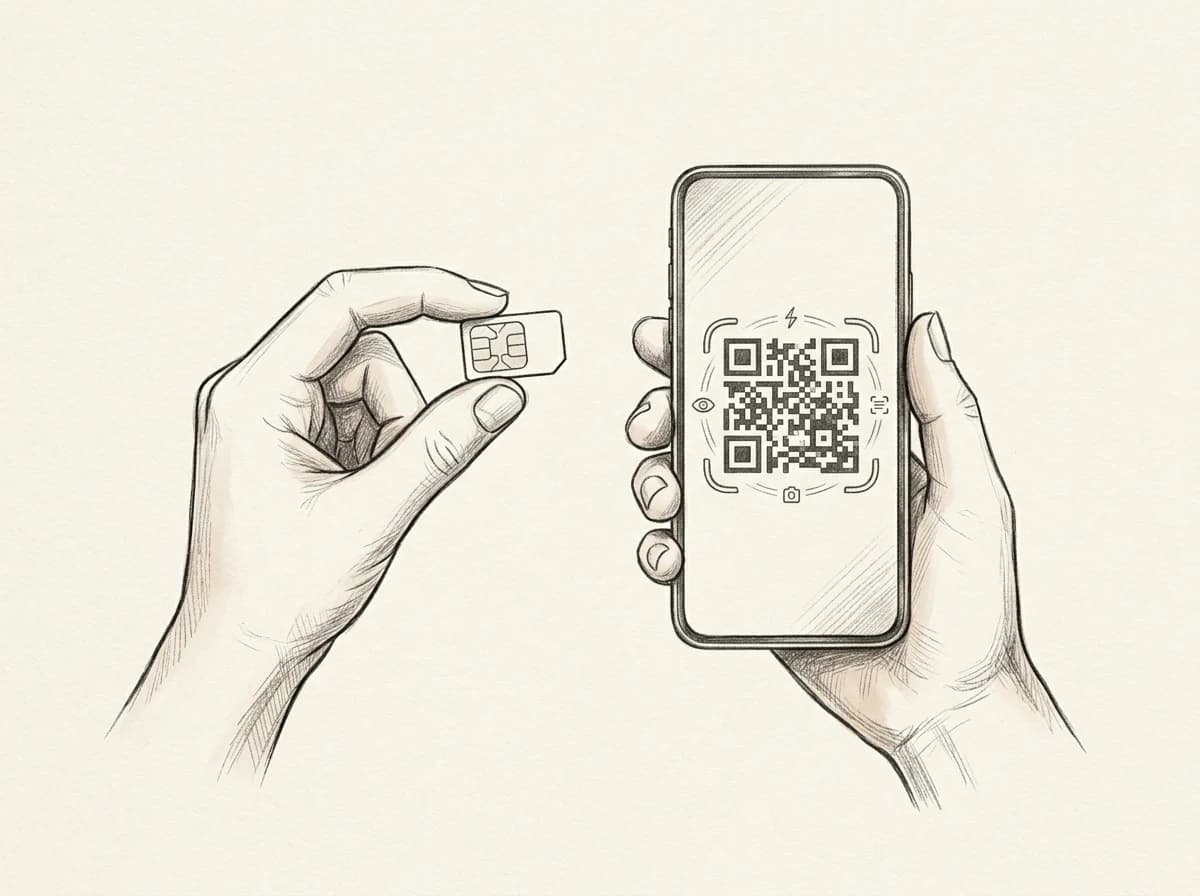
When to pick a local SIM instead
- Trip exceeds 30 days in one country
- You need the cheapest possible data rate
- Your phone is carrier-locked (no eSIM)
- You're in a rural area with one dominant carrier
- Local SIM bundles include calls and SMS you need
Practical rule: If your itinerary crosses two or more countries in under 21 days, buy a single regional eSIM rather than stacking local SIMs. The break-even flips past three weeks, when a long-stay local SIM in one country finally undercuts the per-day regional rate.
Get connected before you leave
Choosing between an eSIM and a local SIM shouldn't take longer than the flight itself. Browse Roamfly's destination plans, pick your GB tier and validity, and you'll have a QR code in your inbox within five minutes — no post-landing queue, no currency scramble at a kiosk.
The decision tree is short: eSIM-capable device plus a trip under three weeks equals a data plan that's already loaded before you clear customs. Longer trip, remote region, price-sensitive budget? Check the local SIM notes in the destination guide first.
If the US is on your itinerary, Roamfly's United States eSIM covers the major carriers' networks without locking you into a physical card you'll bin at JFK. Same logic holds for every destination in the catalog — the plan follows your trip, not the other way around.
Frequently asked questions
Is an eSIM cheaper than buying a local SIM card at the airport?
At the airport, yes — airport SIM kiosks mark up 40–60% over street-vendor prices (TechRadar — eSIM vs physical SIM for travel). Compare a €15 Vodafone Spain SIM at Madrid Barajas versus a €9–12 Roamfly Spain eSIM covering the same 10 GB. Outside airports, local SIMs from supermarkets or convenience stores occasionally undercut eSIM pricing for long stays of 30+ days.
Can I use both an eSIM and a physical SIM at the same time?
Yes, on any dual-SIM device — iPhone XS onward, Google Pixel 3 onward, and most Samsung Galaxy S20+ flagships (Apple support — Use dual SIM with an eSIM). Set your home physical SIM as the voice/SMS line and the eSIM as the data line. You keep your home number active without paying roaming rates for data.
Does my phone need to be unlocked to use an eSIM?
For the eSIM itself, no hardware unlock is needed — but the device must be carrier-unlocked to allow a foreign data profile. iPhones sold directly from Apple are unlocked by default. Carrier-purchased iPhones locked to AT&T or Verizon need a formal unlock request before the eSIM profile will activate abroad (Apple support — Unlock your iPhone for use with a different carrier).
Which countries have the best local SIM options that still beat eSIM on price?
Thailand, India, and Vietnam consistently offer local SIMs that undercut eSIM for stays over two weeks. A True Move H 30-day unlimited plan in Bangkok runs roughly $8; comparable eSIM coverage costs $12–18. The gap narrows for shorter trips because you're buying minimum validity either way.
What happens if I lose my phone — can I reinstall the eSIM?
Yes, with conditions. Roamfly stores your QR code in your account dashboard; on a new compatible device, reinstall from there. Carriers allow one to three re-downloads depending on the plan. A lost physical SIM requires visiting a store, showing ID, and waiting for a replacement — sometimes 24–48 hours in an unfamiliar country.