Planning connectivity for Belarus? Here's what business travelers and journalists need to know about eSIM for Belarus travel plans, network access, and…
Minsk's National Airport has no dedicated SIM kiosk for foreign visitors — and the few airport outlets that sell local SIMs routinely demand a Belarusian passport or residence document to complete the registration. That single friction point strands more travelers than any flight delay. Belarus sits under layers of Western financial sanctions, which means your usual international roaming plan may simply not route through any local carrier (GSMA Mobile Economy Europe 2024).
The border crossing compounds this. Officers at Brest or the Minsk airport sometimes inspect phones, and arriving with no data connection — no map, no hotel confirmation, no emergency contact — is a genuine vulnerability, not an inconvenience. Belarus also blocks a rotating list of VPN servers and foreign news sites, so knowing your connection is live before you hand over your passport matters.
An eSIM loaded at home sidesteps the registration problem entirely. For business travelers especially, losing two hours to connectivity logistics in a city where English-language support is sparse is a cost that compounds fast.
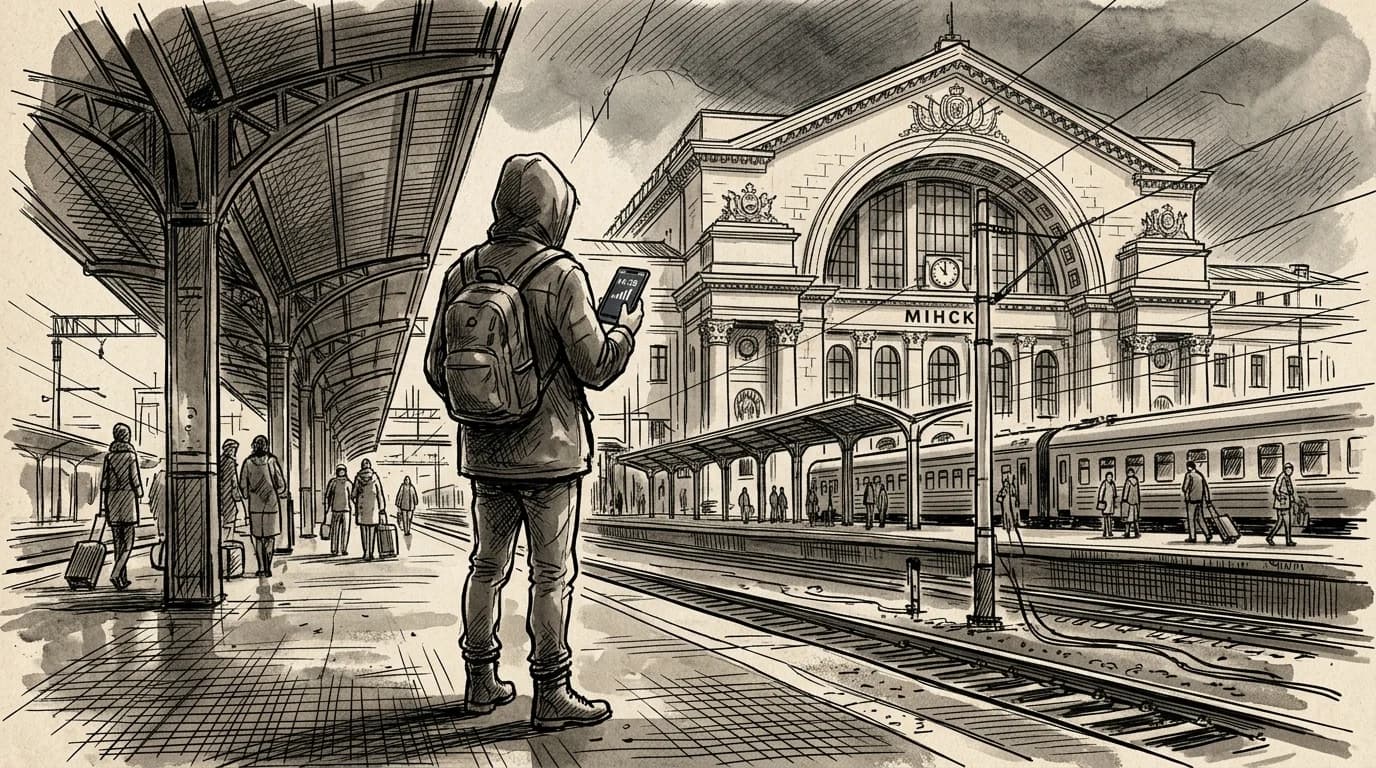
Networks operating in Belarus and what they mean for your eSIM
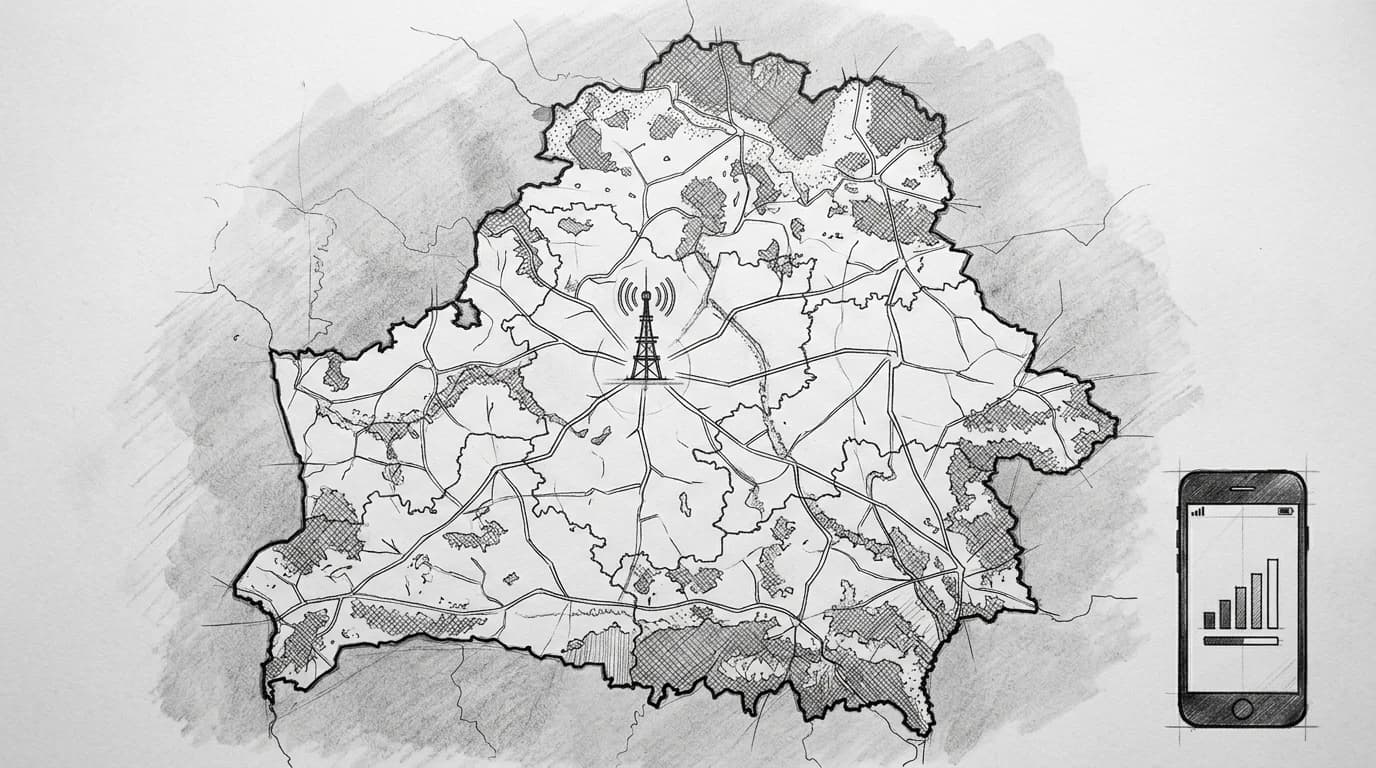
Three carriers split Belarus between them: A1 BY, MTS Belarus, and life: (owned by Turkcell). A1 BY holds the strongest urban footprint in Minsk — its 4G LTE grid covers central districts reliably enough for video calls on Nezavisimosti Avenue without a dropped frame. MTS Belarus has the widest rural reach, which matters if your itinerary runs west toward Brest or north to Grodno, where A1 signal thins out past the ring roads.
5G is not commercially available in Belarus as of 2024 (GSMA Mobile Economy Europe 2024). Every eSIM you activate there runs on 4G LTE at best. Ookla's 2024 Global Index puts Belarus median download at roughly 28 Mbps (Ookla Speedtest Global Index 2024) — adequate for navigation and messaging, slower than most Western European benchmarks (Ookla Speedtest Global Index 2024). Most international eSIM providers route through A1 BY or MTS Belarus; confirm the host MNO before purchasing, because life: partnerships are rare outside regional aggregators.
Practical rule: If your trip goes beyond Minsk — Mir Castle, the Belovezhskaya forest, the Polish border crossing — prioritize a plan that specifies MTS Belarus as the host network. Its rural tower density outperforms A1 BY by a meaningful margin outside city limits.
Practical rule: If your itinerary crosses Belarus plus at least two neighboring countries — say, entering from Poland and exiting into Lithuania — a regional CIS/Eastern Europe eSIM beats a Belarus-only plan. Below two border crossings, the single-country plan wins on cost per GB every time.
Choosing between a regional eSIM and a Belarus-specific plan
Belarus sits at the edge of most regional eSIM maps. Plans marketed as "Eastern Europe" typically cover Poland, the Baltic states, and Ukraine — and stop there. Few regional packages include Belarus explicitly, which means a traveler crossing from Warsaw to Minsk can't assume one eSIM handles both legs.
If your trip is Belarus-only, a Russia-proxied local plan is the closest available benchmark: 20 GB for 15 days runs $53, and 20 GB for 30 days is $57 — about $2.85 per GB either way (Roamfly Belarus eSIM catalog). For a longer itinerary touching Poland on entry and exit, stacking a regional European plan for the border crossings alongside a Belarus-focused plan often costs less than forcing a single package to do both jobs.
Practical rule: If you're transiting more than two countries on the same trip, price each leg separately before assuming a regional bundle is cheaper — the math usually favors stacking once you're past three borders.
The same calculus applies to travelers moving through the South Caucasus; the Azerbaijan eSIM guide breaks down a comparable regional-versus-local decision for that corridor.
Before you fly to Belarus
- Confirm your device is eSIM-capable and carrier-unlocked
- Buy your plan on home Wi-Fi before departure
- Download the eSIM profile and verify it appears in Settings
- Keep your home SIM active for calls and 2FA
- Toggle the eSIM on only after landing in Minsk
Practical rule: Install the eSIM profile at home and keep your physical SIM in airplane mode at the Minsk National Airport (MSQ) border checkpoint. Activating a foreign data session mid-inspection draws unnecessary attention to your device — switch data on only after you've cleared customs.
How to activate your eSIM before landing in Minsk
Install the eSIM profile on your phone at home, not at Minsk National Airport (MSQ). The airport's public Wi-Fi is unreliable for QR-code provisioning, and you won't want to depend on it after a long international flight. The full walkthrough is in the eSIM activation guide for iPhone, but the short version: download the profile while you still have stable home broadband, then leave it toggled off until you need it.
Border crossings into Belarus deserve specific care. Keep your physical SIM in airplane mode from the moment you enter Belarusian airspace — don't let it ping a local tower before you've cleared passport control. Once you're through, switch your eSIM data line on and leave the physical SIM dormant. That sequencing keeps your home carrier from logging a roaming connection to a Belarusian network, which matters if you're traveling on a restricted-country insurance policy or a corporate device with MDM oversight.
Validity starts at activation on most plans, not installation. Confirm that detail before you tap "enable data."
Regional eSIM vs Belarus-specific plan
| Factor | Regional eSIM | Belarus-specific plan |
|---|---|---|
| Coverage area | Multiple CIS or EU countries | Belarus only |
| Best for | Multi-country itinerary | Single-country stay |
| Network access | Roaming on local operators | Direct local operator tie-in |
| Flexibility | (use across borders) | country-locked |
| Data value | Spread across countries | Higher GB per dollar in-country |
Get connected before you leave for Belarus
Belarus sits outside most eSIM catalogs, so finding a plan that actually works at Minsk National Airport takes longer than it should. Roamfly's Belarus eSIM cuts that search to under five minutes — browse, buy, install, done before your gate closes.
The package facts here don't include a Belarus-specific plan, so cross-check the current catalog directly; availability and pricing shift with carrier agreements. What doesn't shift: the setup process is the same whether you're activating two days before departure or in the terminal.
Ready to get connected? Roamfly's Belarus eSIM ships in under 5 minutes.
One last detail worth repeating from the previous section: validity starts at activation on most plans, not at installation. Install the eSIM at home. Wait to enable data until you're ready to use it — ideally once you've cleared customs at Minsk, not before.
Related guides
Ready to get connected? Roamfly's belarus eSIM ships in under 5 minutes.
Frequently asked questions
Which phones support eSIM for Belarus travel?
All iPhones from XR (2018) onward, every Google Pixel from 4 onward, and Samsung Galaxy S20+ and later support eSIM. Verify under Settings → General → About → Available SIM on iPhone, or Settings → Connections → SIM Manager on Android. Belarus imposes no device-specific restrictions on eSIM hardware.
Can I use a VPN on my eSIM while in Belarus?
Technically yes — eSIM data routes through an international carrier before hitting Belarusian infrastructure, so a VPN connection is possible. Belarus law restricts unauthorized VPN use under Article 22.16, and deep-packet inspection is active on domestic networks (Freedom House Freedom on the Net 2023 — Belarus). Many travelers run a VPN regardless; enforcement against tourists has been inconsistent but the legal risk is real.
Will my eSIM data traffic be visible to Belarusian border authorities?
Border officials cannot read eSIM data contents, but they can see your phone's IMEI and active SIM slots during a device inspection. An eSIM profile sitting dormant in your phone is not visible from the home screen. Deleting a profile before crossing is possible, though it means losing the plan entirely — not pausing it.
What happens to my eSIM data plan if I cross into Lithuania or Poland mid-trip?
A regional Eastern Europe or Baltics eSIM automatically switches host networks at the border — no manual steps required. Country-specific Belarus-only plans stop routing data the moment your phone registers on a Lithuanian or Polish tower. Check your plan's coverage map before departure; Roamfly's regional options cover both sides of those crossings.
How do I top up or extend my plan from inside Belarus?
Top up through the Roamfly app over your active eSIM data connection or any available Wi-Fi. Top-ups apply within 60 seconds and extend the validity window if the original plan has not yet expired. Belarus does not block access to app stores or payment processors at the network level for foreign eSIM traffic, so the transaction completes normally in most cases.