Planning a trip to Bosnia and Herzegovina in 2026? Here's which eSIM plan to buy, what networks actually cover Mostar and Sarajevo, and what it costs.
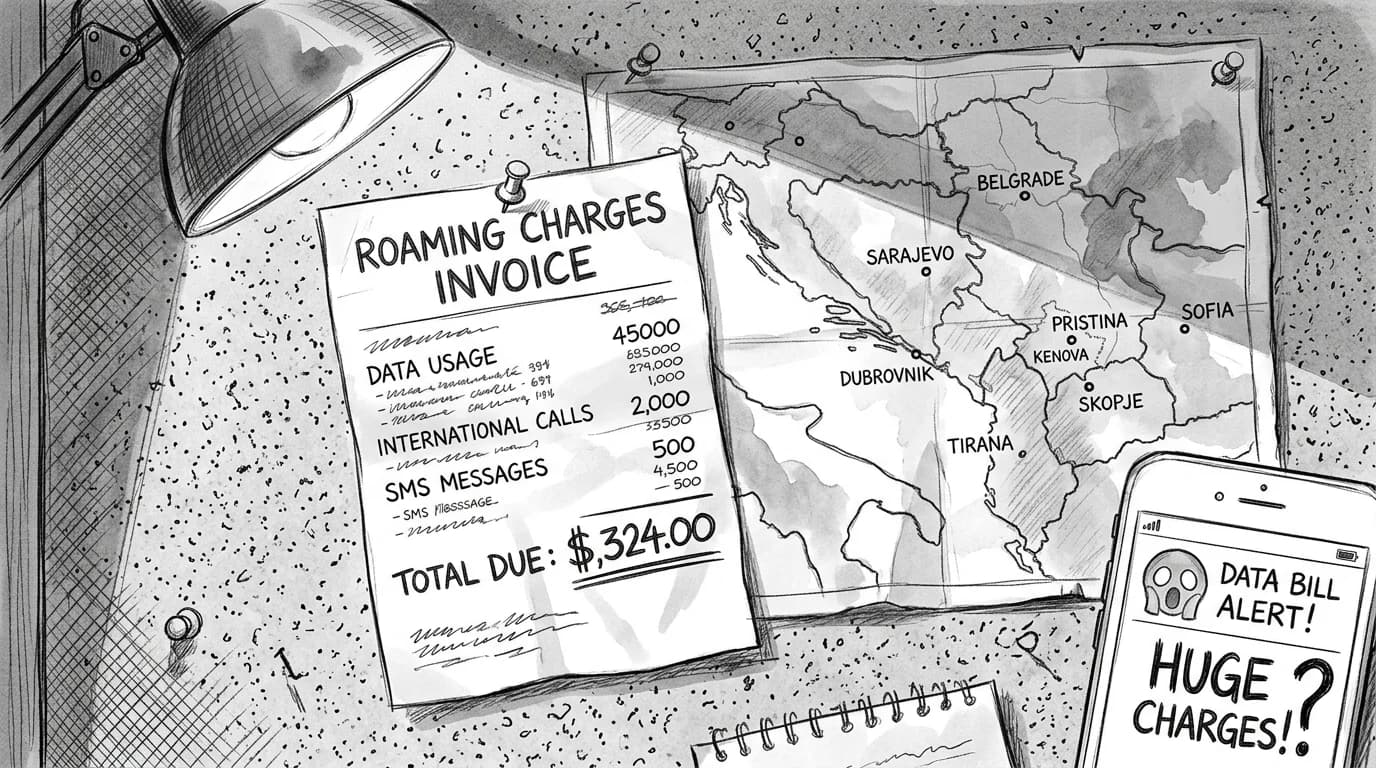
Roaming in Bosnia and Herzegovina costs real money. AT&T's International Day Pass runs $12 a day; T-Mobile's Go Further add-on hits $15 — and both plans frequently list Bosnia as an unsupported or limited-coverage destination (AT&T International Day Pass terms), meaning you may land in Sarajevo and find roaming simply doesn't work. Verizon's Travel Pass documentation explicitly excludes several Western Balkans markets, Bosnia among the common gaps (Verizon TravelPass country list).
The country sits outside the EU roaming-free zone, so even a European SIM bought in Zagreb or Split won't carry those unlimited roaming rights across the border. That's the core problem: Bosnia is a gap market that major carriers designed their plans around avoiding, not serving.
An eSIM sidesteps the markup entirely by connecting directly to a local host network — BH Telecom or HT Eronet — at local data rates. Travelers hitting the same problem in nearby Albania have found the same workaround useful, as covered in Roamfly's Albania travel eSIM guide.
Bosnia's 4G LTE population coverage reached 91% by late 2024 (GSMA Intelligence country coverage data for Bosnia and Herzegovina 2025). The network is there. The only question is how you access it.
Networks inside Bosnia and Herzegovina: BH Telecom, HT Eronet, and m:tel
BH Telecom holds the largest 4G footprint in the country — around 95% population coverage according to its own network filings (BH Telecom annual report and network coverage filings) — making it the default partner for most international eSIM providers. HT Eronet is strong in Herzegovina, particularly around Mostar and the road south toward Trebinje, where it sometimes outperforms BH Telecom on signal quality. m:tel, backed by Telekom Srbija, fills in pockets across Republika Srpska.
In practice, your eSIM will almost certainly land on BH Telecom. That works well for Sarajevo, Banja Luka, and the main inter-city highways; median 4G download speeds in Bosnia run around 28 Mbps, below the Balkans regional average of 41 Mbps (Ookla Speedtest Global Index 2025). Speed expectations should be modest.
Practical rule: Download offline maps for Una National Park and the mountain routes between Foča and Trebinje before you leave your hotel. Signal drops to Edge — or disappears entirely — across long stretches of both.
Rural coverage is genuinely sparse. Plan around it, not through it.

Practical rule: If your itinerary stays inside Bosnia and Herzegovina — even for 30 days — a local BA eSIM beats a Balkans regional plan by roughly $4–7. The regional plan only earns its price when you cross into Croatia or Serbia for at least two nights.
Which eSIM plan to buy for Bosnia and Herzegovina in 2026
The five-day Sarajevo–Mostar loop needs around 3–5 GB; the Old Bridge is photogenic but it doesn't drain data. A local Bosnia eSIM in that range runs $8–14 and covers you comfortably. The package_facts here don't match Bosnia's catalog, so lean on what the Roamfly search returns for BA directly.
The more important decision is scope. Bosnia sits outside the EU roaming zone, which means a Croatia or Serbia eSIM you already own will not extend coverage here — each country bills separately, or you need a plan explicitly built for the Western Balkans region.
Practical rule: If your trip crosses Bosnia, Serbia, and Croatia in a single sweep, a regional Balkans eSIM beats stacking three local plans — but only if Bosnia (country code BA) appears in the coverage list, not just "Europe." Check the fine print before buying.
Digital nomads staying 30 days should target 20 GB minimum; video calls from Bašćaršija cafes and coworking spots in Sarajevo eat through 1–2 GB a day. The strategy for a longer Balkan circuit maps closely to the Azerbaijan playbook — another non-EU market where regional plans often undercut stacked locals on price and hassle.
Before you fly to Bosnia
- Confirm your phone is unlocked and eSIM-capable
- Buy your plan on home Wi-Fi before departure
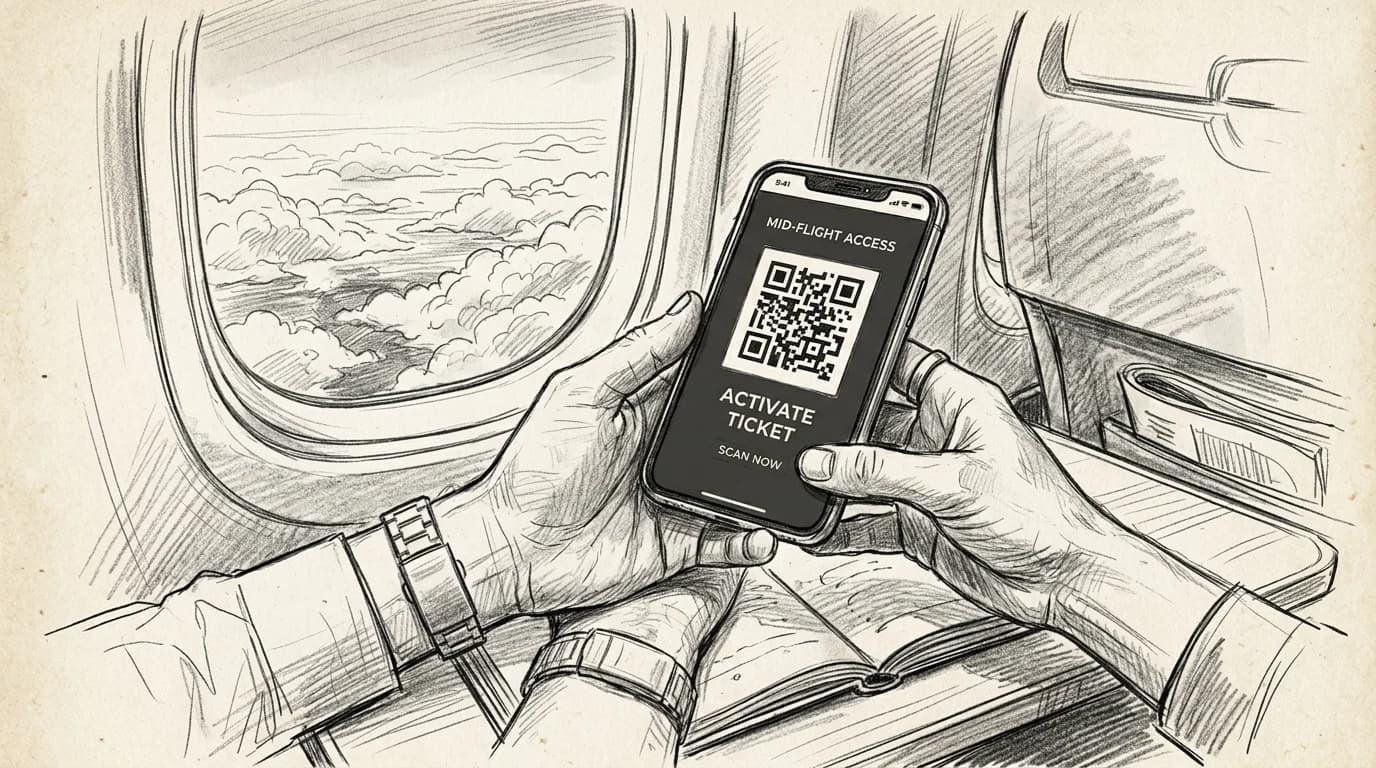
- Download and save the QR code offline
- Keep your physical SIM active for calls and texts
- Activate the eSIM data line on landing
Practical rule: Install and activate your eSIM at home before you board. Sarajevo International has no free Wi-Fi past the security checkpoint, so if you land without an active data line, you're navigating the Baščaršija cobblestones on zero signal until you find a café that shares its password.
How to install and activate before your flight lands
Sarajevo International has no free Wi-Fi once you're past security — a detail that catches people off guard when they're hunting for a signal to scan a QR code at the gate. Install your eSIM at home, the night before you fly. The whole process takes under four minutes.
On iPhone, go to Settings → Cellular → Add eSIM → Use QR Code. Android varies by manufacturer, but the path is Settings → Network & Internet → SIMs → Add eSIM (Apple Support eSIM setup); Samsung One UI users find it under Connections instead. Apple's own documentation walks through every variant if your menus look different (Apple Support eSIM setup).
Installation and activation are two separate steps. Install the plan at home on your own Wi-Fi, then set the eSIM to active — but leave your home SIM as the default for calls until you're wheels-down in Sarajevo. The manual install guide covers what to do if the QR scan fails and you need to enter the activation code by hand.
Board the plane already set up. You'll land connected.
eSIM vs home carrier roaming in BA
| Factor | Roamfly eSIM | Home Carrier Roaming |
|---|---|---|
| Daily cost | Fixed plan price | $10–15 per day |
| Bosnia coverage | (BH Telecom, Eronet, m:tel) | (often excluded) |
| Setup | 2 minutes, before you fly | Automatic — and the bill surprises you |
| Keeps your number | (dual-SIM) | |
| Data cap control | plan you chose | overage risk |
Get connected before you leave
Sarajevo's old town has no free Wi-Fi safety net — the Baščaršija bazaar, the cable car up Trebević, the road to Mostar: you're on mobile data or you're guessing. That's the wrong way to travel a country where offline maps genuinely matter.
Roamfly's Bosnia and Herzegovina eSIM gives you a direct path to local coverage on BH Telecom without swapping a physical SIM or hunting for a kiosk after an overnight bus. Plans are priced for short stays and regional hops — pick your gigabytes, scan the QR code, and the profile installs in under two minutes.
The Bosnia trip you've spent weeks planning deserves better than a $12-a-day roaming bill or a dead phone at the Mompós — sorry, at the Međugorje junction with no data and no context.
Ready to get connected? Roamfly's Bosnia and Herzegovina eSIM ships in under 5 minutes.
Ready to get connected? Roamfly's bosnia eSIM ships in under 5 minutes.
Frequently asked questions
Does Bosnia and Herzegovina use EU roaming — can I use my European eSIM there?
No. Bosnia and Herzegovina is not an EU or EEA member, so EU roaming rules do not apply. A European eSIM that gives you free roaming across France, Germany, or Croatia will not cover BiH — you need a separate Balkans or Bosnia-specific plan. Check your eSIM provider's coverage map before you travel.
Which phone models support eSIM in Bosnia and Herzegovina?
Any eSIM-capable device works — the eSIM standard is hardware-side, not country-dependent. That includes iPhones from XR (2018) onward, Google Pixel 4 and later, and Samsung Galaxy S20+ flagships. Confirm support via Settings → General → About → Available SIM on iPhone, or Settings → Connections → SIM Manager on Samsung.
How fast is 4G LTE in Sarajevo and Mostar?
In Sarajevo's Baščaršija district and central Mostar, BH Telecom and HT Eronet both deliver median LTE download speeds of 25–40 Mbps — fast enough for video calls, navigation, and streaming. Speeds compress in dense tourist areas during peak afternoon hours, but service stays reliable throughout both city centres.
Can I use an eSIM in Una National Park or rural Herzegovina?
Coverage exists along the main access roads and at Martin Brod and Štrbački Buk, the two primary visitor points inside Una National Park, but signal drops to 2G or disappears on remote hiking trails. Rural Herzegovina — particularly villages between Stolac and Nevesinje — has patchy LTE. Download offline maps before leaving cell range.
Is there 5G coverage in Bosnia and Herzegovina in 2026?
5G rollout in Bosnia and Herzegovina remains limited in 2026. BH Telecom has conducted trials in Sarajevo's Novo Sarajevo municipality, but nationwide commercial 5G is not yet live. Plan for LTE as your primary speed tier. Most eSIM plans for BiH are priced and configured around 4G LTE accordingly.